
How to Schedule and Pass Your NY DMV Road Test: Complete Guide to Fast Appointment Booking and Licensing
Scheduling and passing a New York (NY) DMV road test is the final step to getting a driver’s license, and this guide shows exactly how to move from learner permit to a full license with clarity and confidence. You will learn the official DMV scheduling process, the documents and certificates required, practical preparation strategies for passing the on-road evaluation, and options for faster appointments when time is limited. Many applicants face long wait times, confusion over MV forms, and uncertainty about which test sites match their skill level; this article addresses those pain points and presents step-by-step actions to reduce delays and improve pass rates. It also compares conventional DMV booking to expedited private scheduling and explains when an expedited option may save weeks. Read on for clear HowTo steps for booking and rescheduling, EAV tables that compare expedited packages and test sites, checklists of required paperwork, and targeted preparation tips to avoid the most common failures.
How Do I Schedule a NY DMV Road Test Appointment?
Scheduling a NY DMV road test appointment begins with confirming eligibility and using the DMV’s online scheduling tool or phone system to select a test type, a site, and an available date. The core requirements are a valid learner permit, completion of the mandatory 5-hour pre-licensing course (MV-278) when applicable, and a vehicle that meets inspection and registration requirements for the class of test you’re taking. Understanding the official booking flow reduces errors and cancellations when you confirm a slot, and knowing typical wait windows helps set realistic expectations. Below are precise steps to follow when you schedule directly with the DMV, followed by what to expect and how expedited alternatives compare.
What Are the Standard DMV Road Test Booking Procedures in New York?
The standard DMV booking flow requires account creation on the DMV scheduling portal, selecting the test class (e.g., Class D, Class DJ, CDL, motorcycle), and choosing a test site and date from available openings. After choosing a slot, you must verify your learner permit status, confirm vehicle eligibility for the test class, and print or save any confirmation details the DMV provides. Common pitfalls include attempting to book before certificates (like MV-278) are posted to your record, selecting a vehicle that fails inspection on test day, or not checking permit restrictions that block scheduling. If you encounter errors during booking, confirm permit status first, then try alternate sites or call DMV support; these troubleshooting steps will prepare you for rescheduling if needed.
How Long Are the Typical Wait Times for NY DMV Road Test Appointments?
Typical NY DMV road test wait times vary seasonally and by location, but current averages range from about three to five weeks in many areas, with peak-season delays extending toward ten weeks in busier test centers. Urban test centers tend to show longer lead times during spring and summer months when new drivers seek licenses, while smaller or suburban sites often have shorter windows. If your timeline is flexible, choose off-peak months or less busy test sites to shorten waits; understanding seasonal trends helps you plan practice and certificate timing. (dmv.ny.gov)
Can I Reschedule or Cancel My NY DMV Road Test Appointment?
Rescheduling or canceling follows the DMV’s rules: you can typically reschedule online up to a specified cutoff before your appointment without penalty, but missing the deadline can result in lost slots and additional delays. When rescheduling, pick a new date that allows adequate practice and ensures required paperwork remains valid on test day; confirm vehicle availability and any changes to permit restrictions prior to the new date. Common reasons a reschedule may be denied include expired learner permits, missing mandatory certificates, or attempting to change test class improperly. Follow polite rescheduling etiquette—provide clear reasons for changes and act early—to maintain options and reduce the chance of denied requests.
What Is the Expedited Road Test Booking Service in NY and How Does It Work?
An expedited road test booking service is a private scheduling solution that searches for cancellations and openings across test sites and secures earlier DMV road test dates on behalf of the applicant, reducing wait times through targeted notification and concierge coordination. These services act as appointment booking specialists: they gather your eligibility details, monitor DMV availability, and propose earlier appointments when found, often combining additional support like test site information, preparation guides, and logistical help. The process typically requires providing learner permit details, selecting a desired service package, and confirming payment for the expedited search and concierge support. Below is a concise EAV comparison of common expedited packages and how they differ by lead time, price, and best-use case.
This comparison clarifies trade-offs between cost and speed, where Regular balances price with moderate acceleration and Super Rush targets urgent needs. (roadtestsny.com)
What Are the Different Expedited Road Test Packages Offered by Road Tests NY?
Road Tests NY offers tiered expedited packages designed to match urgency and budget: a lower-cost Regular option for modest headway, a Rush tier for noticeable acceleration, and a Super Rush option for the fastest booking windows. Each package varies by how aggressively the service monitors cancellations and prioritizes client callbacks, and concierge support can include guidance on site-specific routes and paperwork. The most appropriate package depends on your deadline: choose Regular if you have time to spare, Rush for a narrow window, and Super Rush for last-minute needs that require maximum effort. Understanding these tiers helps you pick a level that matches both urgency and willingness to pay for faster access. (roadtestsny.com)
How Much Does Expedited Road Test Scheduling Cost in New York?
Pricing for expedited scheduling is transparent by package: the Regular package is listed at $25.00, Rush at $90.00, and Super Rush at $150.00; DMV fees and any vehicle-specific costs are separate and not included in these amounts. These fees cover the service’s booking effort, monitoring, and concierge assistance but do not replace DMV application or retest fees. Payment security is typically handled through secure processors by reputable services; confirm refund and reschedule policies when you book so you understand terms if a DMV cancellation occurs. Knowing exact costs up front lets you compare the expected time savings against the fee to decide if expedited scheduling is worthwhile. (roadtestsny.com)
What Are the Benefits of Using an Expedited Road Test Service vs. the Standard DMV Process?
An expedited service saves time by scanning for earlier slots and coordinating the booking process on your behalf, and many services also provide test-site intelligence, practice tips, and car-rental assistance for test day. This convenience can reduce scheduling stress, improve readiness through targeted prep materials, and compress timelines for students, employees, or travelers. Potential downsides include additional cost and limited control over exact test site choice if the service prioritizes earliest openings; the traditional DMV process remains appropriate for those on flexible schedules or on strict budgets. When timing is critical, the service trade-off—paying a fee to regain weeks—often proves practical and efficient. (road test)
Where Are the NY DMV Road Test Locations and How Do I Choose the Best Site?
NY DMV road test locations are distributed across urban, suburban, and rural areas, and choosing a site depends on your comfort with traffic, maneuver complexity, and expected wait times. Selecting the right test location can meaningfully improve your chance of success: urban routes emphasize traffic management and tight turns, while suburban or rural routes test speed control and lane changes. Use official DMV location search tools for addresses and hours, then weigh site characteristics like route complexity and parking when choosing a booking site. (dmv.ny.gov)
What Documents and Requirements Do I Need for My NY DMV Road Test?
To take a NY DMV road test you must present a valid learner permit, proof of identity as required by DMV rules, and any mandatory course certificates such as the 5-hour pre-licensing course (MV-278) or driver education certificates (MV-285) for junior drivers. Your vehicle must be properly registered, insured, and pass a basic safety inspection before the examiner will allow the test to proceed. Knowing precisely which forms apply to your situation prevents same-day disqualifications and reduces stress. The table below maps each key document to who needs it, when it is required, and where to obtain or submit it.
This mapping clarifies which paperwork to prioritize during scheduling and in the days leading up to the test so your appointment proceeds without administrative complications. (dmv.ny.gov)
What Is the Role of the NY Learner Permit in Scheduling a Road Test?
The learner permit is the foundational eligibility document: it must be valid and free of restrictions that block scheduling before you can select a road test date. The permit confirms your test class eligibility and often determines whether additional certificates (like MV-278) are required by the DMV for booking. Before you attempt to book a road test, verify permit status in your DMV record and ensure it has not expired or been suspended, because such issues will prevent successful scheduling. Confirming permit validity in advance prevents last-minute cancellations and supports smoother rescheduling if necessary. (dmv.ny.gov)
Why Is the 5-Hour Pre-Licensing Course Mandatory Before Booking?
The 5-hour pre-licensing course (MV-278) provides required classroom instruction covering safe driving practices and is a prerequisite for many first-time road test candidates; the certificate demonstrates completed education and is typically required before the DMV permits scheduling. The course can be completed in-person or online through authorized providers and should be saved as a certificate to present when required. Completing the MV-278 early allows scheduling flexibility and ensures there are no administrative hurdles when the examiner reviews records on test day. (book your road test)
What Other Certificates Are Required for Junior Drivers?
Junior drivers under 18 frequently need both a driver education certificate (MV-285) and a supervised driving log (MV-262) documenting required practice hours—often a specific hourly minimum—to be eligible for the road test. The MV-262 should be completed with a supervising adult and include dates and conditions of practice drives; the MV-285 is issued upon completing state-approved driver education programs. Submission of these documents is essential at the time of test scheduling or on test day, depending on DMV rules; ensure they are accurate and fully signed to avoid disqualification. Clear completion of junior driver documentation directly impacts the ability to receive a provisional or full license after passing. (dmv.ny.gov)
What Vehicle and Paperwork Must I Bring on Road Test Day?
Bring your learner permit, proof of identity, MV-278 (and MV-285/MV-262 if applicable), valid vehicle registration, and current insurance card to the test site, and ensure the vehicle is mechanically safe and meets class-specific requirements. Examiners perform a basic vehicle inspection and will refuse a test if safety items—lights, brakes, mirrors, or tires—are not compliant. Prepare a checklist the day before to confirm documentation and inspect basic vehicle systems; arriving with everything ready reduces stress and helps you focus on driving performance.
How Can I Prepare to Pass the NY DMV Road Test Successfully?
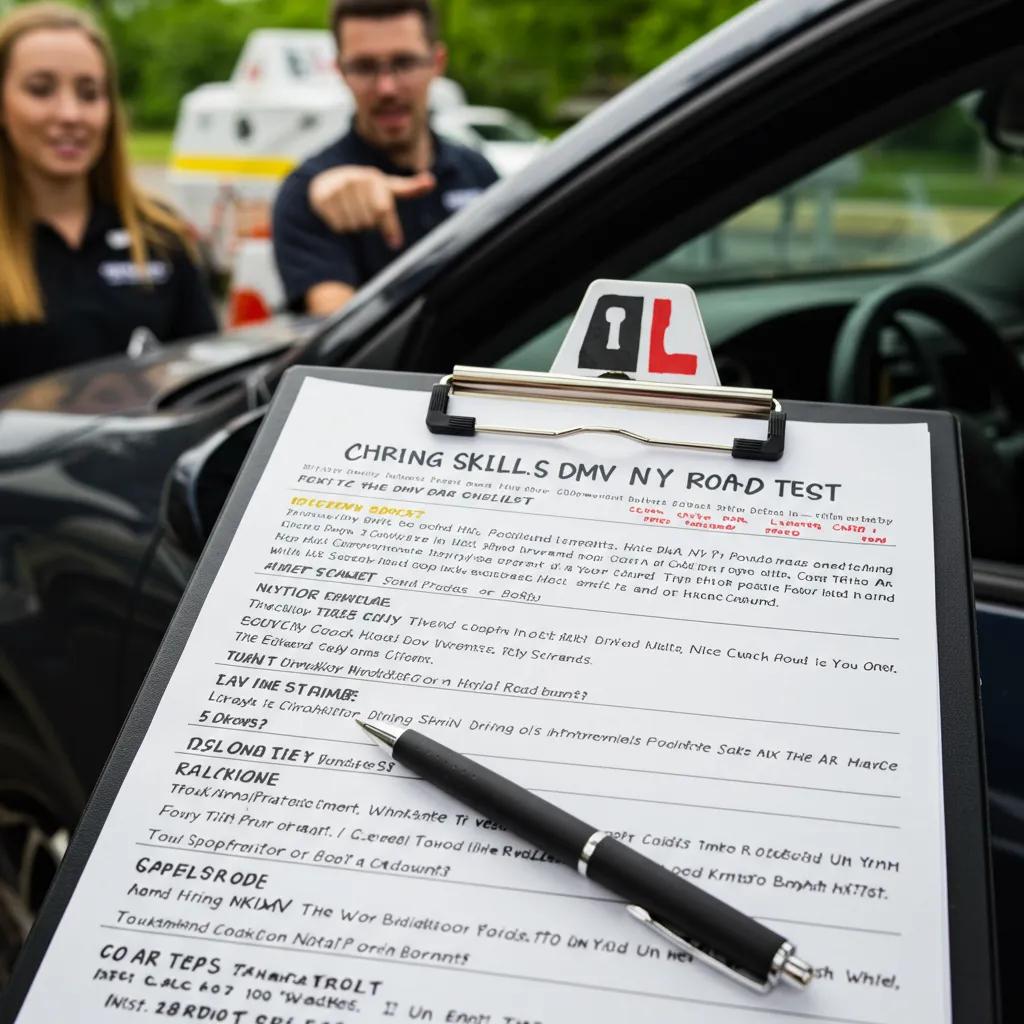
Passing the NY DMV road test requires practicing core driving skills until they become habitual, studying site-specific route tendencies, and eliminating common errors through deliberate drills; this combination produces consistent, safe driving performance under examination. Prioritize maneuvers that carry high weight—parallel parking, three-point turns, intersection scanning, signaling, and lane positioning—and run timed mock tests with a supervising driver or instructor. Integrating study of DMV rules, completing the MV-278 course, and tracking supervised driving hours forms a comprehensive preparation plan. Below are targeted checklists and practice items that align with examiner expectations and reduce common failure causes.
The following checklist highlights priority practice areas:
- Observation and Scanning: Maintain correct mirror checks and shoulder checks at least three seconds before maneuvers.
- Signaling and Positioning: Use timely signals and correct lane placement for turns and lane changes.
- Parking Maneuvers: Practice parallel parking, uphill/downhill stops, and three-point turns until smooth.
- Speed and Spacing: Match posted speeds, maintain safe following distances, and adjust for weather.
What Key Driving Skills Does the NY DMV Evaluate During the Road Test?
Examiners evaluate observational habits, speed control, lane discipline, signaling, and safe execution of parking maneuvers, with emphasis on consistent safety checks and legal adherence. Each maneuver is assessed for control, awareness of surroundings, and smoothness; sudden or unsafe actions often lead to point deductions or failure. Practice should simulate real-world traffic conditions so behaviors like gap selection and yielding become automatic. Mastering these core skills increases confidence and positions you for success during the live test.
What Are Common Mistakes That Cause Road Test Failures in NY?
Common failures include inadequate observation (missing blind spots), improper signaling or lane positioning, rolling stops, excessive speed, and vehicle safety issues detected during the pre-test inspection. Address each by practicing corrective drills—mirror and shoulder-check routines, controlled deceleration to stops, and rehearsed parking sequences—to remove performance gaps. Many failures are preventable through structured practice and by addressing nervous habits such as over-steering or rushing maneuvers. Eliminating these common mistakes improves both test-day performance and long-term driving safety.
How Can I Use Practice Resources and Pre-Licensing Courses to Improve?
Combine supervised driving hours with targeted lessons from certified instructors or online resources tied to the MV-278 curriculum; keep a driving log to track hours and progress so you can focus practice where needed. Use mock tests that replicate examiner timing and criteria to build test-specific endurance and procedural memory. Pre-licensing courses provide a foundation of rules and defensive-driving techniques, while private lessons can target individual weaknesses for rapid improvement. Structured preparation that pairs quantity (hours) with quality (focused drills) reliably raises pass rates.
What Happens After Passing the NY DMV Road Test?
After passing the NY DMV road test, you will typically receive a temporary license or receipt at the testing site and the permanent driver’s license will arrive by mail within the DMV’s stated processing timeline. For junior drivers, passing triggers the next stage in graduated licensing, which may still carry restrictions until certain age or experience thresholds are met. If you fail and need a retest, the DMV allows rebooking subject to their availability and any fees or waiting periods that apply. Understanding the post-test steps helps you plan license receipt and next privileges, and if timing matters, expedited scheduling services are an option to get earlier retests or replacements.
How Do I Obtain My NY Driver’s License After Passing the Road Test?
On successful completion, the examiner typically provides a temporary document you can use immediately while the permanent license is processed and mailed; keep proof of identity and your test receipt safe until the card arrives. Processing timelines vary, but the temporary document is legally valid until you receive the official license in the mail. Retain copies of all paperwork and update any necessary records with your insurer or employer to reflect the new licensing status. Having these documents organized streamlines the post-test transition to a full, permanent license.
What Are the Next Steps for Junior Drivers After Passing?
Junior drivers move into the next phase of the graduated licensing program, which commonly imposes restrictions on passengers, nighttime driving, and mobile device use until certain age or experience milestones are met. Parents and guardians typically sign forms or acknowledge restrictions that accompany the new license tier. Plan for these restrictions by reviewing allowed driving hours and passenger limits and ensuring supervising adults reinforce safe driving habits. Understanding these requirements prevents inadvertent violations and supports gradual driving independence.
Can I Schedule a Retest if I Fail, and What Are the Fees?
If you fail the road test, you can schedule a retest following DMV rules; fees and wait times vary by location and availability, so prepare to book early and use practice time to address the failure reasons before reattempting. Use targeted practice on deficient skills and consider instructor lessons for focused improvement if repeated attempts are needed. If your timing is constrained, expedited booking options may help find sooner retest dates for a fee, balancing cost with the need to retake promptly. Rebooking pragmatically after analyzing failure points increases the chance of passing on the next attempt.
Frequently Asked Questions
What Should I Do If I Miss My Scheduled Road Test Appointment?
If you miss your scheduled road test appointment, you will need to reschedule it through the DMV’s online portal or by phone. Be aware that missing an appointment may result in a waiting period before you can book a new date, and you may lose your original time slot. It’s advisable to check the DMV’s cancellation policy to understand any potential fees or penalties. To avoid this situation in the future, set reminders for your appointment and ensure you have all necessary documents ready in advance.
How Can I Improve My Chances of Passing the Road Test on the First Try?
To improve your chances of passing the road test on your first attempt, focus on consistent practice of essential driving skills, such as parallel parking, lane changes, and obeying traffic signals. Consider taking lessons from a certified driving instructor who can provide personalized feedback and help you identify areas for improvement. Additionally, familiarize yourself with the specific routes and maneuvers that are commonly tested in your area. Mock tests can also help simulate the test environment and build your confidence.
Are There Any Age Restrictions for Taking the NY DMV Road Test?
Yes, there are age restrictions for taking the NY DMV road test. Generally, applicants must be at least 16 years old to take the road test with a valid learner permit. However, junior drivers under 18 must also complete a 5-hour pre-licensing course and may need additional documentation, such as a driver education certificate. It’s important to check the specific requirements based on your age and the type of license you are applying for to ensure compliance with DMV regulations.
What Happens If I Fail the Road Test?
If you fail the road test, you will receive feedback from the examiner on the areas where you need improvement. You can schedule a retest, but be aware that there may be a waiting period and additional fees involved. It’s crucial to take the time to practice the skills that led to your failure before attempting the test again. Many applicants find it helpful to take additional driving lessons or practice with a qualified supervisor to address specific weaknesses.
Can I Use My Own Vehicle for the Road Test?
Yes, you can use your own vehicle for the NY DMV road test, provided it meets the necessary safety and registration requirements. The vehicle must be properly registered, insured, and pass a basic safety inspection before the test. Ensure that the vehicle is in good working condition, with functioning lights, brakes, and mirrors. If you choose to use a rental vehicle, confirm that it complies with DMV regulations and is suitable for the class of test you are taking.
What Should I Do If I Have Special Needs or Require Accommodations for the Road Test?
If you have special needs or require accommodations for the road test, it’s important to inform the DMV in advance. You can request specific accommodations, such as additional time or the use of adaptive equipment, when scheduling your appointment. The DMV is committed to providing equal access to all applicants, so be sure to communicate your needs clearly. Documentation from a healthcare provider may be required to support your request for accommodations.
How Can I Find the Best Time to Schedule My Road Test?
To find the best time to schedule your road test, consider factors such as peak testing seasons, local traffic patterns, and your own availability. Typically, weekdays and early morning slots tend to be less busy than weekends or late afternoons. Additionally, avoid scheduling during peak months, such as spring and summer, when many new drivers are seeking licenses. Use the DMV’s online scheduling tool to view available dates and times, and choose a slot that aligns with your practice schedule for optimal readiness.
How Do I Get a Fast Road Test Appointment in NY?
Fast appointment strategies include watching for cancellation windows, checking less busy sites, being flexible with times, and considering an expedited booking service that monitors openings and secures earlier dates on your behalf. Combining these tactics gives you both DIY options (cancellation monitoring) and paid acceleration if time is limited. If you need guaranteed speed, weigh the cost of a private expedited package against the time saved to decide.
What Documents Are Required to Schedule and Take the NY Road Test?
You need your learner permit, MV-278 pre-licensing certificate when applicable, current vehicle registration, proof of insurance, and any junior-driver documents like MV-285 or MV-262 if under 18. Presenting these items complete and valid on test day prevents administrative disqualifications. Double-check document names and expiry dates prior to travel to the test site.
Can I Book a Motorcycle or Commercial Driver’s License Road Test Through Expedited Services?
Expedited services typically support a range of test classes, including Class D, Class DJ, CDL classes A/B/C, and motorcycle licenses, but each class has unique vehicle, equipment, and documentation requirements that must be met. Confirm service support for your specific class and ensure you provide the required details and certified vehicles for the test. Meeting class-specific equipment rules is mandatory regardless of scheduling speed.
How Do I Pay for Road Test Scheduling Services Securely?
Private scheduling services generally accept major payment methods through secure payment processors and state clear refund and cancellation policies; verify these details before purchase and ensure payment pages display standard security indicators. Keep receipts and transaction records for reference in case of booking issues or refunds. Confirming payment security and refund terms protects you financially while using expedited booking options.
For applicants who want faster scheduling or concierge guidance, Road Tests NY offers tiered expedited booking packages (Regular: $25.00; Rush: $90.00; Super Rush: $150.00) and supplemental support such as test site information, preparation guides, online pre-licensing course options, car rental assistance for test day, and 24/7 concierge customer service. If you decide time is a higher priority than cost, these options provide a direct route to earlier test opportunities while you finalize documents and practice.
- Key documents checklist: learner permit, MV-278, registration, insurance.
- Top scheduling tips: monitor cancellations, choose less busy sites, consider expedited packages.
- Preparation priorities: observation, signaling, parking practice, and safe speed control.
These concise action items help you convert planning into results and prepare for immediate next steps in booking and passing the NY DMV road test.
About the Author
This guide was compiled by a team of driving education specialists and DMV process experts with over a decade of experience navigating New York’s licensing requirements. Our authors have assisted thousands of new drivers and re-testers in successfully obtaining their licenses, providing insights into official regulations, common test pitfalls, and effective preparation strategies. We are committed to delivering accurate, up-to-date information to help you achieve your driving goals with confidence.