
NY Road Test Appointment: How to Book Your Test and Pass in New York
Booking and passing the NY road test is a major step toward getting your New York driver’s license. It takes both correct paperwork and focused practice. This guide breaks down what a road test appointment is, who needs one, and how scheduling ties into practical preparation and site choice. Many applicants face long DMV waits, confusing document rules, and varying test-site difficulty. Here you’ll find clear, up-to-date steps to book an appointment quickly and the best strategies to pass the first time. We cover step-by-step scheduling, a comparison of expedited booking tiers, the maneuvers examiners look for, how to spot easier test sites, the exact documents and vehicle checks you’ll need, and the most effective practice resources. We also point to tools and services that speed scheduling and readiness — while keeping the focus on practical habits you can use right away.
How Do I Schedule a NY Road Test Appointment Efficiently?
Scheduling a NY road test appointment means reserving a test date and time with the DMV or using an expedited third‑party booking service to shorten the wait. Efficient scheduling comes down to three things: correct permit information, completed pre‑licensing requirements, and choosing realistic locations and times. When those pieces are in order you avoid rejected bookings and long delays. The DMV portal and third‑party services both ask for permit details and your test type, but third‑party options often surface open slots faster and include concierge help. Enter permit numbers carefully, upload the right documents, and know typical timelines for standard and expedited routes so you can plan around work, school, or travel.
What Are the Steps to Schedule a Driving Test in NY Online?
Scheduling online is a short sequence of actions — do them in order and you’ll avoid common mistakes. First, have your learner permit number and any pre‑licensing certificate IDs ready; these confirm eligibility. Next, pick your test type (Class D, Class DJ, motorcycle, or commercial), choose preferred regions or sites, then check dates and confirm a slot that meets supervised driving rules. Finally, save your confirmation or appointment ID and prepare your vehicle and document checklist for test day. If your preferred slot isn’t available, try refreshing during early mornings or late afternoons when cancellations appear, or use an expedited service to find openings faster. These steps set you up to decide whether an expedited booking tier is right for you.
- Online scheduling needs permit and certificate verification, site selection, time confirmation, and saving appointment details.
- Double‑check permit numbers and certificate IDs before submitting to prevent rejections.
- Refresh availability during off‑peak hours and have backup sites ready to capture cancellations.
This simple routine makes booking predictable and leads naturally into choosing an expedited tier if you need faster access.
What Are Expedited Road Test Options and Their Benefits?
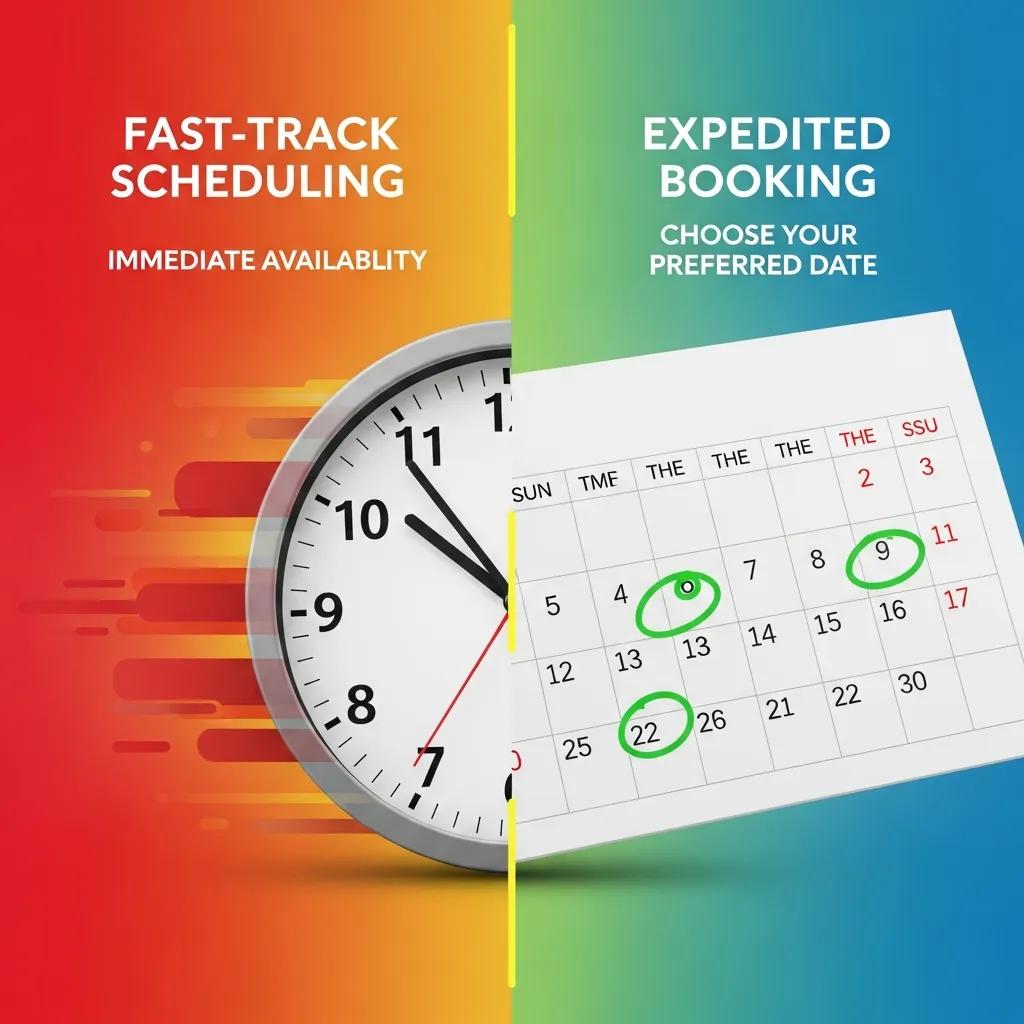
Expedited booking tiers give you prioritized access to open test slots and hands‑on support. The common tiers are Regular, Rush, and Super Rush. Regular is the standard DMV timeline, Rush shortens waits substantially, and Super Rush gets you the fastest openings for tight deadlines. Using an expedited service can save you weeks compared with standard DMV waits and often includes concierge support and quicker confirmation. For busy students or workers, the cost of faster access can be worth it to avoid extended permit periods or multiple test attempts. Weigh the cost versus time saved to pick the right tier for your situation.
- Regular: Standard scheduling without priority — good if your timing is flexible.
- Rush: Shorter wait (typically 1–3 weeks) — useful for medium‑term plans.
- Super Rush: Fastest access (often within 1 week) — ideal when you need to test immediately.
Many applicants combine the fastest booking option with focused practice so they’re ready once the slot is locked in. how to prepare in a short amount of time.
What Are the Best Strategies to Pass the NY Road Test on the First Try?
Passing on the first try comes from mastering the core maneuvers, practicing in similar traffic conditions, and meeting vehicle and paperwork rules. The core approach is a structured practice plan that mirrors what examiners watch for and where points are commonly deducted. Practice should focus on parallel parking, 3‑point turns, lane changes, controlled stops, and right‑of‑way decisions. Mental prep — managing nerves, listening carefully to instructions, and signaling clearly — prevents avoidable errors. Vehicle readiness (mirrors, signals, brakes, lights) and arriving early to warm up at the test area also help. Mix targeted skills practice, site‑specific rehearsal, and pre‑test vehicle checks for the best shot at a first-time pass.
- Learn core maneuvers in sequence: parallel parking, 3‑point turns, lane changes, stopping/starting.
- Practice in traffic similar to your chosen test site.
- Run frequent mock tests with a supervising driver who notes deductions.
- Confirm vehicle mechanical readiness and bring the correct paperwork.
- Use mental rehearsal and a calm, steady driving style to show confidence to the examiner.
These tactics focus your practice on what matters most and set the stage for the specific maneuvers below.
Which Key Maneuvers Are Tested During the NY Road Test?
Examiners check maneuvers that show vehicle control, awareness, and lawful decisions. Core items include parallel parking, the 3‑point turn, lane changes, controlled stops and starts, and yielding/right‑of‑way. Parallel parking tests steering precision and speed control to fit the vehicle inside the space without touching curbs. The 3‑point turn checks turning technique and traffic awareness. Lane changes require proper signaling, mirror checks, and a shoulder check to cover blind spots. Controlled stops need smooth braking and correct stopping position, while right‑of‑way demonstrates correct yielding at intersections and crosswalks. Drill each maneuver until it becomes automatic so you can perform calmly during the exam.
Practice each skill with a short checklist that outlines the step sequence and common mistakes to avoid — this builds the muscle memory you’ll rely on during the test.
What Common Mistakes Should I Avoid During the NY Road Test?
Common errors include not checking mirrors or blind spots, late or missing signals, hitting curbs while parking or turning, poor speed control, and failing to yield. Examiners deduct points for unsafe or illegal actions and will fail applicants who create hazards. To fix these problems, use drills like mirror‑signal‑shoulder checks for every lane change, slow‑speed curb awareness for parking, and gradual speed control exercises. Do realistic mock tests with a supervising driver who records each mistake so you can target the most damaging errors. Reducing these common faults preserves points and lowers the chance of an automatic fail.
Addressing these mistakes ties directly into choosing a test site where practiced maneuvers line up with typical local traffic conditions.
Where Are the NY Road Test Locations and Which Are Easiest to Pass At?
Test site choice matters because traffic, examiner styles, and route complexity vary by location and affect pass rates. An “easier” site usually has lower traffic, simpler turning and parking areas, fewer busy intersections, and predictable examiner routes. Comparing sites against those factors helps you pick places that suit your skills or where a bit more practice will pay off. A searchable test site directory lets you find sites by region and capture notes on traffic and examiner strictness. After you pick a promising site, do practice runs nearby so the actual test feels familiar and less stressful.
Below is a simple comparison to help you evaluate typical site types and shortlist locations that reduce test complexity and support targeted practice.
This comparison shows which types of sites tend to be easier and why, and it leads into a short checklist for choosing a specific station.
How Can I Find and Choose the Easiest Road Test Sites in New York?
Start by defining what “easy” means to you — traffic volume, room for parking/turning, typical examiner approach, and commute time. Use the searchable directory to filter for lower‑traffic stations, then confirm conditions with local reconnaissance: drive the area at test hours, time routes, and ask recent test‑takers about examiner tendencies. Decide whether a longer drive to a simpler site is worth it compared with a nearby but tougher station — often a short trip to a suburban lot is a smart trade. Practice at shortlisted sites at times similar to your appointment so there are no surprises on test day.
- Set selection criteria: traffic, route complexity, and nearby practice space.
- Use directory filters and on‑site checks to validate conditions.
- Choose sites where your practiced maneuvers match typical examiner routes.
Picking the right site naturally leads back to booking a confirmed appointment once you’ve found the best match.
What Are the Specific Road Test Sites in NYC and Upstate NY?
Typical site examples show how urban and upstate settings differ in route complexity and parking layout. Urban centers often require navigating heavy intersections and bus lanes, demanding quick decisions and tight control. Upstate or suburban sites usually offer more open practice areas and gentler traffic that favor controlled maneuvers. When comparing stations, note turnaround space, parallel parking availability, proximity to busy intersections, and the presence of large commercial vehicles that might alter routes. Favor sites where you can realistically replicate examiner routes during practice to build confidence for test day.
Weigh these features to decide whether it’s worth traveling farther for an easier test or focusing local practice to handle urban challenges.
What Are the Essential Requirements and Preparations Before Your NY Road Test?
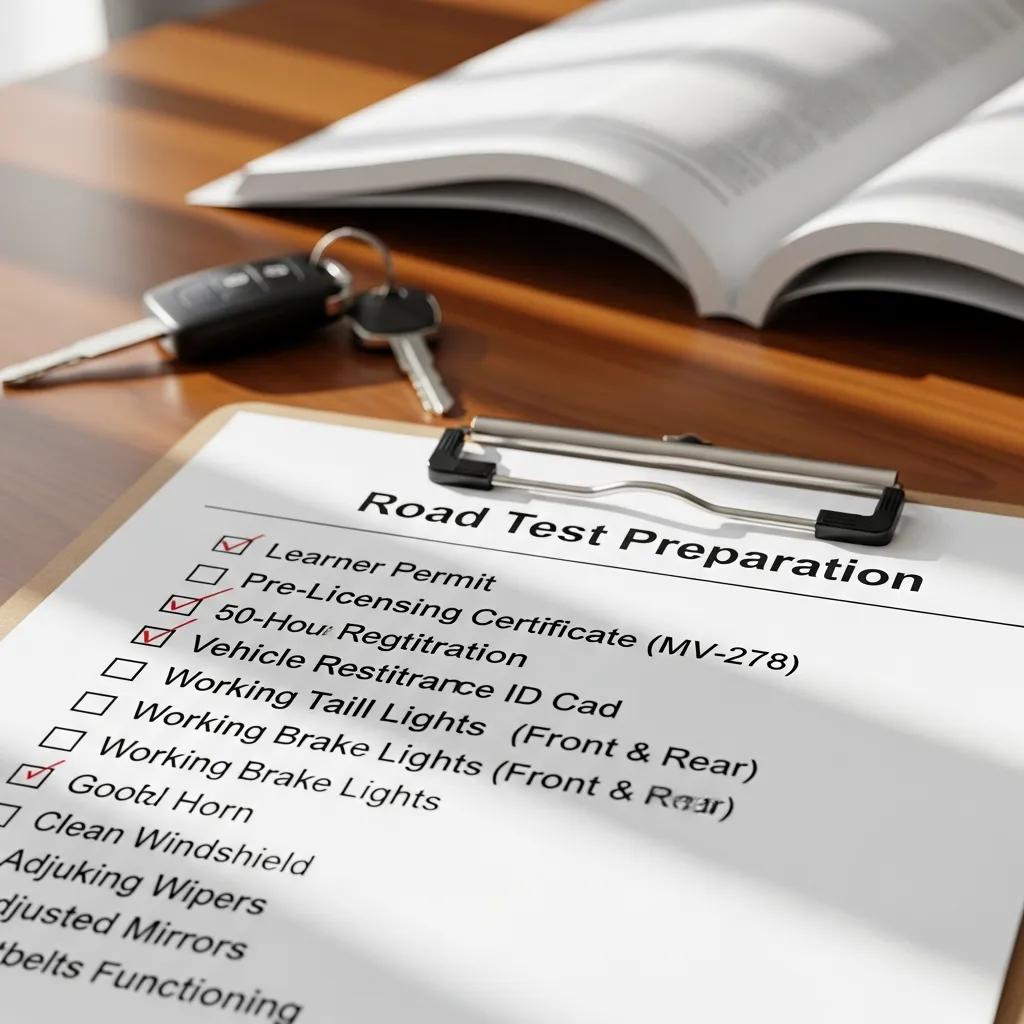
Before test day, gather the required documents, confirm vehicle compliance, finish any mandatory courses, and log supervised driving hours when needed. Typical items include your valid learner permit, a pre‑licensing certificate (when required), and your appointment confirmation — the examiner will check these before you drive. Make sure the vehicle is mechanically safe — brakes, lights, signals, and tires — and that registration and insurance are in the car. Do a final practice run on the chosen route, get a good night’s sleep, and mentally rehearse the maneuvers. Services like online pre‑licensing courses and rental cars that meet DMV rules can solve gaps quickly if you need them.
The table below maps required documents to common service options so you can fix any gaps before arrival.
This mapping helps you verify documents and shows where services can fill gaps, leading into a concise documents checklist.
What Documents and Certificates Are Needed for the NY Road Test?
Bring originals of your learner permit, proof of completed pre‑licensing instruction (MV‑278 or MV‑285 where required), and your appointment confirmation — the examiner will inspect them before you begin driving. Your permit must be valid and match the person taking the test. If you use a rented car, carry the rental agreement that explicitly allows road test use and shows the vehicle meets safety requirements. Always double‑check the official required document list shortly before the test and keep originals together in one folder for a smooth check‑in.
- Bring originals (not photocopies) of your permit and course certificates.
- If renting, make sure the rental paperwork explicitly permits road test use.
- Have your appointment ID printed or available electronically.
How Should I Prepare My Vehicle and Myself for the Road Test Day?
Do a thorough mechanical check so the car meets examiner expectations: brakes, tire tread, horn, lights, mirrors, seat position, and clean windshield. Confirm vehicle registration and proof of insurance are present and valid, and that rental permissions are documented if using a rental. For yourself, arrive early, wear comfortable clothes, get a good night’s rest, and take a short warm‑up drive near the test site to settle nerves. Mental rehearsal of maneuvers and simple breathing techniques will help you stay calm. If you rent a car, verify the agreement allows road tests and that the vehicle meets DMV safety standards to avoid disqualification.
Covering both car and personal readiness reduces avoidable issues on test day and lets you use practice time more effectively.
How Can I Use Practice and Resources to Improve My NY Road Test Performance?
Good practice mixes focused drills, site‑specific rehearsals, and structured resources like permit quizzes, pre‑licensing courses, and supervised lessons. Each resource yields different returns for the time you invest. Free quizzes and guides quickly expose knowledge gaps. Online pre‑licensing courses give the formal instruction and the certificate you’ll need. In‑car practice with a supervising adult or instructor builds control and observation skills, and renting a compliant vehicle for rehearsal reduces surprises from unfamiliar controls. Pair short, high‑quality study sessions with repetitive on‑road drills to improve maneuvers and decision‑making under pressure.
Use the table below to compare practice resources by time commitment and effectiveness so you can prioritize what helps most.
This comparison helps you spend practice hours where they matter most. The next sections explain where to find materials and how to use them.
Where Can I Access NY Road Test Practice Guides and Permit Quizzes?
Practice guides and permit quizzes are easy to find and should be used to turn book knowledge into targeted drills. Free quizzes highlight weak spots in rules and decision making that cause on‑road errors. Run quizzes often to track progress, then design short drives that target the weakest areas — like yielding, speed control, or signaling. Combine quiz results with structured driving sessions that mirror test maneuvers and routes. This mix of low‑intensity quiz work and focused driving practice produces steady gains without burning you out.
How Do Online Pre-Licensing Courses and Car Rentals Support Test Success?
Online pre‑licensing courses issue the official certificate needed to test and reinforce the rules examiners evaluate. If you don’t have a compliant vehicle, rental services that permit road test use provide a practical, legal option for both rehearsal and the test itself. Renting also reduces the risk of mechanical surprises from an unreliable personal car, and completing the online course removes administrative roadblocks by delivering the required certificate. Use both services when needed so you meet eligibility, practice in an appropriate vehicle, and present a compliant test experience.
- Online pre‑licensing courses: provide required certification and reinforce safe driving rules.
- Car rentals for tests: supply compliant vehicles and consistent controls for practice.
- Use both when necessary to remove administrative and logistical hurdles.
Road Tests NY offers services that match these needs: a searchable test site directory, free practice quizzes and guides, online pre‑licensing courses, car rentals for the road test, and 24/7 online booking with same‑day confirmation. For faster scheduling, Road Tests NY also provides expedited paid booking options — Regular ($25.00, within 8‑week wait time), Rush ($90.00, 1–3 week wait time), and Super Rush ($150.00, within 1‑week wait time) — plus 24/7 concierge support for confirmations. These services speed administrative tasks, but they work best when paired with deliberate driving practice.
These resource mappings show how services support your prep and underline that administrative help should complement — not replace — focused driving practice.
About the Author
Michael Chen
Certified Driving Instructor & NY DMV Expert
Michael Chen is a highly respected certified driving instructor with over 15 years of experience guiding new drivers through the complexities of the New York State road test. Having helped thousands of students successfully obtain their licenses, Michael possesses an unparalleled understanding of DMV regulations, common examiner expectations, and effective strategies for mastering critical maneuvers. His expertise is rooted in practical, hands-on instruction and a commitment to fostering safe, confident drivers. Michael regularly consults on driving education best practices and contributes to resources aimed at simplifying the licensing process for New Yorkers.