
Complete NY Road Test Guide: Requirements, Prep & SchedulingComplete Guide to the NY Road Test — Requirements, Preparation, Locations, and Scheduling
The NY road test is New York State’s on‑road exam that checks whether a learner-permit holder can drive safely and follow the rules. This guide walks you through what to bring, which maneuvers matter, how to pick the right test site, and how to schedule efficiently. You’ll get clear eligibility steps, an exact document checklist, the maneuvers examiners score, vehicle inspection rules, and practical scheduling tips to cut wait time. Many people trip up on timing, site choice, or last‑minute vehicle problems — this article gives step‑by‑step prep, practice drills, and booking strategies designed to lower those risks and boost your chances of passing. Read on for checklists, practice routines, comparisons of booking tiers and inspection items, and course options that pair well with on‑road practice.
What Are the New York Road Test Requirements and Eligibility?
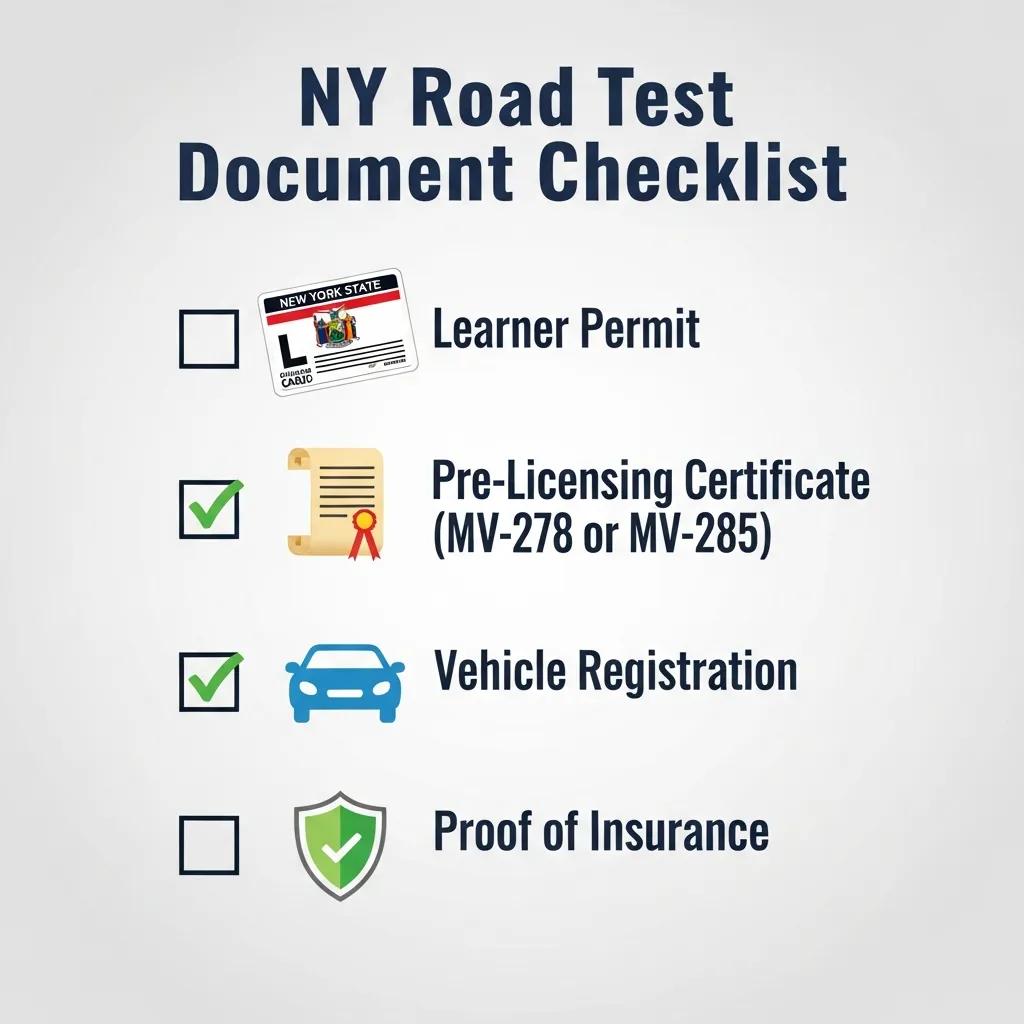
The New York road test requires that a learner permit holder bring specific documents and use a roadworthy vehicle so the examiner can evaluate driving skills. Meeting these requirements prevents same‑day disqualification and keeps the focus on your driving. At a glance, the rules verify identity, legal permission to drive, completion of the state’s pre‑licensing class, and that the test vehicle is safe. Below is a detailed checklist to review before test day so you avoid rescheduling and extra fees. After this checklist we explain who can take the test and age‑related rules for junior licenses.
This section lists the documents and prerequisites you must bring:
- Valid learner permit for the specific road test type.
- Pre‑licensing certificate (MV‑278 or MV‑285) showing required coursework completion.
- Acceptable photo ID as required by the DMV and any site‑specific instructions.
- Proof of vehicle registration and current insurance for the test vehicle.
Checking these items beforehand prevents administrative denial and lets you concentrate on driving when your appointment arrives.
Who Can Take the NY Road Test? Eligibility Criteria Explained
Eligibility focuses on age, permit status, and completion of the state’s pre‑licensing course. If you’re under 18, you generally must hold a learner permit for at least six months and complete the required course that issues an MV‑278 or MV‑285 certificate. Junior license candidates must also meet supervised driving requirements — typically at least 50 hours total with 15 at night — and have any required parental permissions. Confirm these rules early so you schedule the correct test type and bring any extra documents you may need.
What Documents and Certificates Are Needed for the NY Road Test?
Bring original documents — photocopies are usually not accepted — so the examiner can verify identity and the vehicle’s legal status. Key items are your learner permit, the MV‑278 or MV‑285 pre‑licensing certificate, any required photo ID, and the vehicle’s registration and insurance. Missing any of these commonly results in automatic denial. If you can’t produce originals, arrange replacements or reschedule well before your appointment. Pack everything in a single folder and check it the night before to reduce stress and let you focus on driving.
How to Pass the NY Road Test: Key Maneuvers and Tips
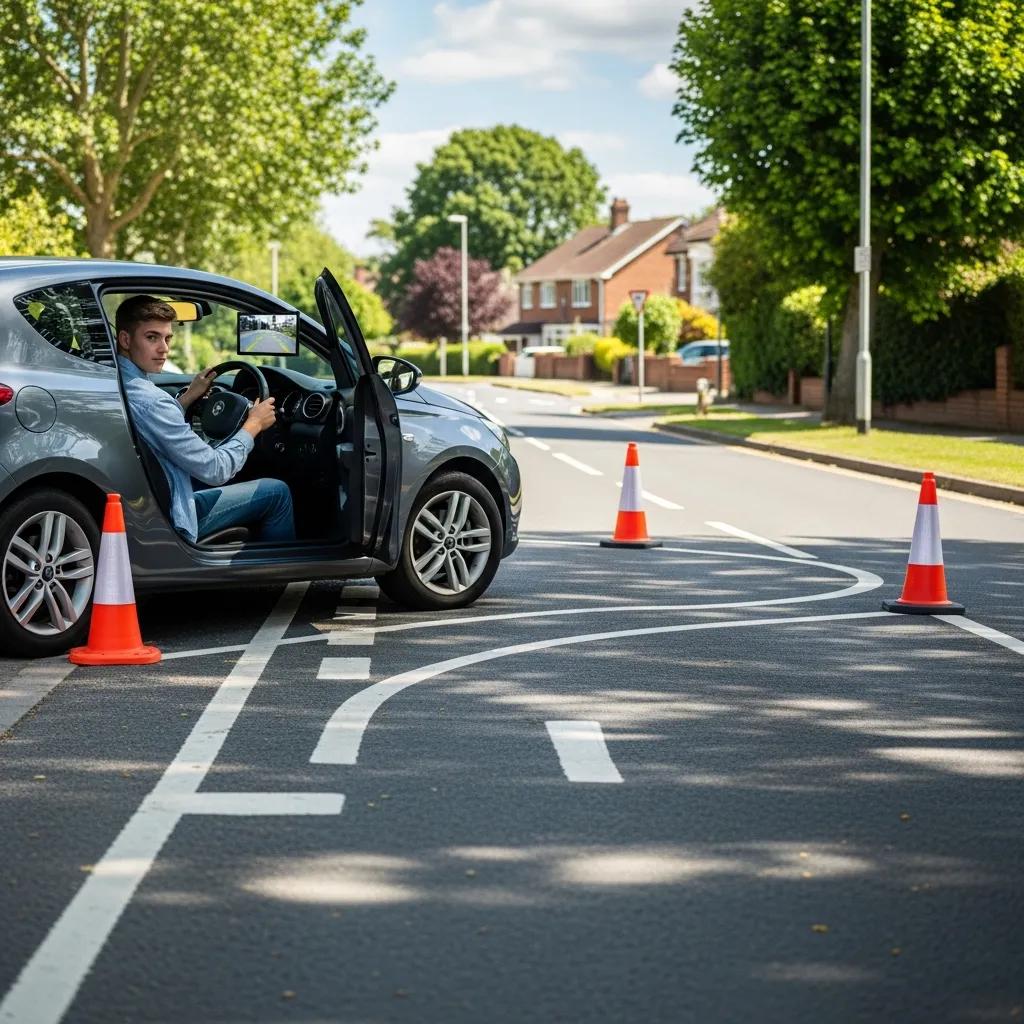
Passing the NY road test comes down to steady vehicle control, consistent observation, and calm, law‑abiding decisions. Examiners score specific skills — mirror and shoulder checks, signaling and lane position, speed control, and correct execution of maneuvers like parallel parking and the three‑point turn — so focused practice on those areas raises your pass rate. Below we break down the essential skills, common mistakes to avoid, and step‑by‑step routines you can rehearse until they become second nature. Master these basics and the specific how‑to steps will fall into place.
Research shows structured, repeated practice speeds learning on maneuvers such as three‑point turns and parallel parking.
Mastering Road Test Maneuvers: Learning Curves & Practice
Five driving tasks were evaluated: “up/down hill,” “three‑point turn on a narrow road,” “moving forward and backward on an S‑curve,” “reversing into a garage,” and “parallel parking.” For each task 40 participants’ practice results were averaged and fitted to Wright’s learning curve model. All R² values were high (0.88–0.97), indicating the tasks followed a predictable power‑function learning curve. Reported learning rates were: up/down hill 0.9162; three‑point turn 0.8912; parallel parking 0.8802; reversing‑into‑garage 0.8736; S‑curve 0.8698.
What examiners expect on every drive:
- Clear observation: mirror and head checks before lane changes and at intersections.
- Smooth vehicle control: steady acceleration, proper braking, and correct clutch/gear use.
- Correct signaling and lane positioning: timely signals and consistent lane centering.
What Are the Essential Driving Skills Tested on the NY Road Test?
Key skills are situational awareness, vehicle control, and lawful decision‑making — each can be built with simple drills. Situational awareness means combining mirror checks, shoulder checks, and scanning for pedestrians and hazards; narrating what you see during supervised drives helps build that habit. Vehicle control is about smooth throttle and brake inputs, consistent gap selection, and precise steering — practice slow figure‑eights and controlled stop‑and‑go exercises. Signaling and lane positioning require anticipating moves and settling the car in the correct lane position early; rehearse these on quiet streets to develop spatial judgment. These drills prepare you for the most commonly evaluated maneuvers.
Which Common Mistakes Should You Avoid During the NY Road Test?
Many failures stem from avoidable habits: skipping blind‑spot checks, late or missing signals, abrupt speed changes, and poor lane placement. Hesitation at intersections and failing to yield are also frequent point losses — timed decision drills and feedback from a supervisor reduce that. Technical mistakes like overcorrection during maneuvers or jerky clutch use in manuals are common too; practice slow, deliberate inputs and use reference points to steer smoothly. Targeting these mistakes during practice makes your test‑day driving calmer and more consistent.
Where Are the NY DMV Road Test Locations and How to Choose the Best Site?
NY DMV test sites differ in layout, traffic patterns, and common maneuvers. Picking a site similar to your practice environment can make the test feel more familiar and reduce surprises. Look at features like on‑site parking for vehicle checks, typical traffic levels, and nearby intersections or highways. Our location database lists site details and tactical tips so you can match your strengths to the likely test routes. The short table below summarizes example site types and preparation suggestions to help you decide.
Introductory table of test-site comparisons:
Choosing a site that matches how you practice lowers the chance of unexpected maneuvers on test day. The next section outlines what to expect at main test locations.
What Are the Main NY Road Test Sites and Their Features?
Main test sites often have predictable patterns in the maneuvers they require. Urban locations tend to include curbside tasks and parallel parking; suburban and peripheral sites usually emphasize lane changes and highway merges. If possible, visit the test site ahead of time or practice on similar roads to get comfortable with typical routes, practice parking areas, local speed limits, and congestion times. Mapping these patterns makes your practice more targeted and effective.
Which Are the Easiest NY Road Test Locations and How to Prepare for Them?
“Easiest” sites usually have lower traffic, clear signage, and straightforward test routes — which reduce stress and let you show core skills. Look for sites with lower average vehicle counts, roomy maneuver areas, and fewer complex intersections. Practice on roads with similar conditions: focus on smooth low‑speed maneuvers, clear signaling, and steady lane placement rather than aggressive merging. Avoid high‑traffic urban sites until your scanning and lane‑change routines are consistently reliable.
How to Schedule Your NY Road Test Appointment Efficiently
Scheduling a NY road test efficiently means knowing typical DMV wait times, using cancellation monitoring, and choosing legitimate expedited options when needed. Wait times vary by location and season; common free tactics include watching cancellation lists and expanding your search to nearby sites. If you need a faster appointment, paid expedited tiers are a legitimate option — they’re summarized in the table below and explained further after. The steps that follow will help you maximize your chance of an earlier slot.
Booking option comparison table (EAV format):
This comparison shows how each tier balances timing and cost. Below is a short scheduling checklist to follow before you book.
What to do when scheduling:
- Confirm eligibility and vehicle readiness before you book to avoid wasted appointments.
- Search multiple nearby sites and monitor cancellations to increase chances of an earlier slot.
- Use expedited tiers only when the timing justifies the cost and you’re ready to use the appointment.
Combining administrative readiness with active booking tactics reduces wait time and helps ensure you arrive for a useful, prepared test.
What Are the Standard and Expedited NY Road Test Booking Options?
The standard DMV booking process requires an online account and selecting an available slot at your chosen site; wait times can stretch several weeks depending on demand. Free tactics like cancellation monitoring and widening your search radius often surface earlier openings but need persistence. When those options aren’t enough, legitimate expedited tiers offer predictable, faster placement for a fee; choose the tier that matches how quickly you must be tested to avoid unnecessary expense. Knowing these options helps you balance cost, timing, and readiness before you commit.
How Does Road Tests NY Expedite Your Road Test Scheduling?
Road Tests NY provides an expedited scheduling service with three tiers — Regular, Rush, and Super Rush — that map to progressively faster timelines and fees. The service combines an online booking flow with concierge support to watch for openings and handle administrative steps for you. For readers considering help: Regular is free, Rush is $25.00, and Super Rush is $50.00. Pick the tier that fits your urgency and budget, and make sure your documents and vehicle are ready so the appointment is usable when it’s secured.
What Are the Vehicle Requirements for the NY Road Test?
Your vehicle must meet legal and functional standards at the pre‑test inspection to avoid automatic disqualification. Preparing a short inspection checklist the day before the test prevents common failures. Inspectors check registration and insurance, lights and signals, horn, seatbelts, tires, and overall mechanical safety — major problems like inoperative brakes or steering will cancel the test. Do a full walkaround the night before and again on test morning, and bring the vehicle’s paperwork. The table below converts inspection items into a quick checklist you can follow before you drive to the site.
Vehicle inspection checklist table:
Running through this list helps ensure the vehicle meets examiner expectations and reduces the chance of a test‑day rejection.
Which Vehicle Safety Standards Must Be Met for the NY Road Test?
Key safety standards include working brakes, tires with acceptable tread, functioning lights and signals, secure seatbelts, and an operational horn — all items that influence whether the examiner continues with the test. Mechanical issues such as fluid leaks, worn tires, or dashboard warning lights suggest safety risks and commonly lead to denial, so fix those before arrival. Legal documents — registration and insurance — must be originals and match the vehicle; examiners check paperwork prior to driving. Meeting these standards avoids administrative delays and lets the examiner focus on your driving.
How to Prepare Your Vehicle for the NY Road Test Inspection?
Do a multi‑point check the day before: inspect tire pressure and tread, test lights and horn, verify fluid levels, and make sure registration and insurance are in the car. Small fixes — replacing a bulb, topping off washer fluid, or tightening a mirror — can be handled at home or a nearby service stop and often prevent a reschedule. Keep a small kit in the vehicle with spare bulbs, a printed registration copy, and proof of insurance to resolve minor issues quickly. With the car ready, you’ll arrive more confident that paperwork or mechanical problems won’t derail your appointment.
What Online Courses and Resources Can Help You Prepare for the NY Road Test?
Structured online courses and official DMV materials complement hands‑on driving practice by explaining test expectations, scoring criteria, and maneuver sequences. Courses typically include video demos, step‑by‑step practice plans for maneuvers like parallel parking and three‑point turns, and scenario quizzes that improve decision‑making under pressure. If you want formal instruction, available options include a New York State Road Test Preparation Course ($75.00), Driving Foundations 101 ($49.00), and a Highway Driving module ($69.00), each targeting different skill sets and time commitments. Below we outline how each course helps and where to find official practice materials.
This next subsection explains course benefits and when to choose each.
How Do NY Road Test Preparation Courses Improve Your Driving Skills?
Good preparation courses break examiner scoring into clear practice drills, improving things like parking accuracy, timely observation, and lane‑change judgment through repetition and instructor feedback. Courses that focus on practical drills reduce common mistakes by breaking maneuvers into reference points and timed steps, turning complex actions into repeatable habits. Course‑driven practice often speeds improvement versus unguided practice because you get immediate corrections and progressive challenge. For many learners, pairing a short online course with on‑road supervised practice gets you test‑ready faster than either alone.
Where to Find Official Guides and Practice Materials for the NY Road Test?
Official DMV guides, forms, and checklists are the primary sources for rules, scoring criteria, and required documents — use them as your baseline. Practice materials include the official manual, downloadable rule summaries, and scenario quizzes that mirror the knowledge portion of licensing; pair those with video demos of maneuvers for best results. Combine these official resources with targeted online courses that emphasize vehicle handling and examiner expectations to build a complete preparation plan. Using both ensures you cover paperwork, road rules, and the maneuvers that decide pass/fail outcomes.
If you need help aligning courses with a booking timeline, Road Tests NY offers expedited appointment options alongside preparation courses — consider scheduling instruction so it finishes before you begin on‑road practice.
For candidates who want faster scheduling plus guided prep, Road Tests NY bundles expedited appointment tiers with online course options — Regular Road Test (free), Rush Road Test ($25.00), Super Rush Road Test ($50.00) — and courses including the New York State Road Test Preparation Course ($75.00), Driving Foundations 101 ($49.00), and Highway Driving ($69.00). These services are built to support readiness with concierge scheduling, secure payment, and course content that reinforces the maneuvers and paperwork checks described above.
About the Author
This guide was compiled with insights from Michael Chen, a certified driving instructor and former DMV consultant with over 15 years of experience in driver education and licensing. Michael specializes in New York State road test preparation, having helped thousands of students successfully navigate the licensing process. His expertise in DMV regulations and practical driving techniques ensures that the advice provided is accurate, current, and highly effective for aspiring drivers. Michael is dedicated to empowering new drivers with the knowledge and skills needed for safe and confident driving.