

NY Driving Test : Your Complete Guide
Ready to get behind the wheel and earn that coveted license? Scheduling your road test in New York shouldn’t be a bump in the road; it’s the gateway to freedom on four wheels. With various options to book a suitable date and time, you can skip the headache of long DMV wait times and find a road test location that works best for you. In this article, we dig into the common queries and concerns-from tackling FAQs in the Help Center to preparing for the pivotal day. Keep reading to ensure you navigate through to success, fueled with insider tips and key insights. Remember, it’s important to have vehicle insurance before taking the driving test .
Key Takeaways
- Getting car insurance is essential for peace of mind on test day
- Rush road test scheduling can significantly cut down wait times
- Properly signaling and smooth braking are crucial for test success
- Practice tests are key for confidence and familiarizing with test scenarios
- Steady control and understanding traffic laws contribute to passing the road test
Essential Key PointsBook Now

When you’re gearing up for your driving test, the last thing you want is to hit a bump in the road with your vehicle insurance. Make sure your vehicle is covered because you definitely don’t want any surprise hiccups throwing you off your game. For more information, visit the Help Center or check out the FAQs section to find a roadtest location.
Securing an insurance policy for your vehicle before the big day isn’t just a smart move – it’s essential. The peace of mind knowing your car is insured lets you focus on nailing that parallel park or acing your three-point turn.
And when it comes to hitting the road for your driving test, you’ve got options to book that don’t involve playing the waiting game:
- Choose the Regular Road Test Schedule for a tried-and-true approach with a 6-10 week wait.
- Upgrade to a Rush Road Test Schedule, trimming down the wait to just 1-3 weeks.
- Need a super quick turnaround? The Super Rush Road Test has your back with an impressive 1-week wait time.
Remember, no matter how soon you need to schedule your test, your vehicle needs to be road-ready with valid vehicleinsurance. It’s not just about compliance; it’s ensuring that, come test day, you’re as confident as can be, behind the wheel of your trusty, insured ride.
Schedule and Take a Road Test
Once you’ve mastered the rules of the road and feel ready to navigate traffic with ease, respecting speed limits and avoiding any moving violations, it’s time to put your skills to the test—literally. Moving from preparation to actualization involves a clear path: initially honing your driving skills to perfection, then finding the perfect time slot to scheduleyour driving test . With clear-cut steps mapped out, you’re bound to breeze through the process of securing a test date. On the big day, apply what you’ve learned, keeping cool and collected as you demonstrate your abilities. Afterward, await the arrival of your results, and with any luck, celebrate your new driving privileges. The Department of Motor Vehicles (DMV) provides valuable information, including what to expect on the test and how to decipher your results, easing the journey from practice to license. Don’t forget to factor in the fee, a small price to pay for the freedom of the open road.
Step 1: Prepare for Your Test
Strapping on your seat belt isn’t just the law; it’s the first step to preparing for your driving test . Buckling up should be second nature by the time you’re cruising to the DMV, as should understanding the nuances of sharing the road with large vehicles like buses. Remember, observing how these larger companions maneuver through traffic can give you insights into spacing and timing – both critical for your upcoming assessment.
Staying clear of alcohol before getting behind the wheel of a motor vehicle is a no-brainer, but it bears repeating, especially before a road test. Alcohol impairs judgment and reaction times, which won’t do you any favors when aiming for a clean record. Keeping a cool head also means avoiding behaviors that could lead to traffic tickets, as infractions can not only delay your driving test but imprint bad habits that are tough to shake.
Step 2: Schedule a Test
After honing your knowledge and practicing how to smoothly approach a stop sign without harsh brake usage, it’s time to cement your driving test day into your calendar. Scheduling your road test in New York City can be a breeze with the right service, making sure you’re on track to showcase your driving skills without the typical long wait times.
Getting your vehicle insurance prepped means more than just a full tank of gas; having liability insurance is a non-negotiable must. A well-planned booking aligns with having all your documents sorted, ensuring when you pull up at the test center, you’re as ready as your car is insured and primed for the urban circuit that awaits you.
Step 3: Take the Road Test
Test day has arrived, and it’s time to merge your knowledge with action. Abiding by the law during your exam means obeying all traffic signals, ensuring you stay within the designated speed limit limits, and keeping a safe distance from the truck ahead. Mastery of these elements not only demonstrates your understanding of road safety but also inches you closer to passing your driving test.
While on the test, one of the most critical parameters you’re judged on is your ability to maintain appropriate speeds. This means knowing when to hit the 25 mph mark in residential zones and when to adjust your speed limit accordingly in different traffic conditions. It’s this grasp of speed limit regulations that could make or break your success on the exam.
Step 4: Get Your Results
Once the engine’s off and your pulse has settled, the quest for knowledge shifts to your test outcome. Opening your web browser to check the DMV results page becomes the next crucial step. FAQs often help dissolve any confusion about scoring, while reminders to hold off on texting while driving are sprinkled generously across the site—valuable advice for any learningdriver freshly navigating the roads.
For many, the wait for results can stir up nerves like a windy road tests one’s handling. The moment of truth arrives, often in the cool, impartial format of an online score sheet, endorsed by the Federal Motor Carrier Safety Administration‘s standards. This score isn’t just a number; it’s a testament to the hours poured into learning the art of the road—with all its turns, stops, and signals.
Department of Motor Vehicles
At the heart of the driver‘s journey stands the Department of Motor Vehicles, the pivotal hub where mastering parallel parking and steering the wheel with confidence transitions into formal recognition. This is where your defensive driving skills come under the microscope, and the line between responsible driving and reckless behavior is clearly drawn. This is where your driving test skills come under the microscope, and the line between responsible driving and reckless behavior is clearly drawn.
Should complications arise, and the road to a driver‘s license become more twisted than expected, the DMV is also the place where a lawyer might intersect with your journey. It’s a crossroads of legal acumen meeting the rubber on the road – a spot where understanding the letter of the law is as important as knowing the rules of the road.
How many mistakes can you make on a driver’s test?
Worrying about flubbing the big driver‘s test is a rite of passage for many, but knowing just how much wiggle room you have for mistakes can ease those pre-test jitters. For instance, a minor oversight, like forgetting to signal, might not tank your chances, but significant errors that could lead to revocation of license under other circumstances are usually instant deal-breakers.
On the driving test, every passenger is an observer, silently ticking off your triumphs and slips. As you maneuver through traffic, a misjudged left turn or a too-close-for-comfort moment with a motorcycle can add up and reflect poorly on your final score. While one mistake won’t define your test, a string of them certainly can, so stay vigilant!
Even when a parent or guardian is your most frequent passenger during practice runs, a driving test‘s standards are much stricter. Their reassuring presence is replaced by an evaluator’s critical eye, making minor mistakes more palpable and leaving less room for those nervous slips of the mind or hands.
Lastly, it’s crucial to remember that while small errors on a driving test might be forgivable, any action that puts others at risk or borders on misdemeanor is sure to cut your attempt short. Keep it cool, obey the rules, and drive with the care you would show with a car full of your closest friends – that’s your ticket to a passing grade.
Mistakes that Can Cause You to Fail the Driving Test
In today’s world, where the internet offers abundant tips for acing your driving test, actually being in the driver‘s seat can bring unexpected challenges. A common culprit for waving the white flag of failure is incorrectly navigating lane changes, which, if done rashly, can drag you down like a trailer without brakes. Hard braking is another misstep that’ll have the evaluator watching you through the rearview camera with a critical eye. It shows you’re not anticipating the road ahead, which is essential for safe driving. But let’s not steer clear of another biggie: failing to control the steering. This can lead to a swerve into felony territory if it results in dangerous situations. Ultimately, being mindful of these risky maneuvers is key to ensuring that the only things flashing before your eyes are green lights, not red flags.
Improperly Changing Lanes
Zipping through traffic, blending from one lane to another, seems straightforward, right? But when education on the proper way to change lanes is lacking or hazy like looking through a dirty pair of glasses, troubles stack up. Being able to clearly signal your intentions is the first act towards a clean lane change, and failing to do so can be a glaring miss in the eyes of your evaluator.
In the world of criminal law, the smallest oversights can lead to big consequences. Similarly, on the driving test, neglecting to signal before crossing into another lane might not land you in front of a judge, but it definitely won’t win you any points with the person holding your driver‘s license fate. It’s through such feedback on the road that we fine-tune our driving habits.
- Understanding the importance of clear signaling.
- Learning from feedback to improve driving habits.
- Avoiding minor infractions that can have major consequences.
Hard Braking
Sudden stops are a big no-no on the road. When a driver slams on the brakes, it’s a tell-tale sign to the driving test examiner that the person behind the wheel isn’t reading the road well or anticipating what’s ahead. This sort of jolting stop can be especially unsettling in a commercialvehicle where smooth transitions are expected.
Braking too hard not only rattles nerves but could be misinterpreted as an emergency maneuver. A driver should strive for smooth sailing, not skipping to a stop. Moreover, excessive hard braking might indicate that one wasn’t sufficiently prepared, which is easily avoided with the right exam to help schedule practice sessions well ahead of the driving test.
Failing to Control the Steering
One of the classic mistakes on the NY driving test is a failure to maintain steady steering control. Gripping the wheel too tightly or making abrupt turns could signal to the instructor that you’ve got a wobbly handle on the situation. It’s pretty much like slamming on the brakes when you should be gliding smoothly into your movements.
Another common slip-up is speeding into a curve or swerving between lanes, actions that scream a lack of control. Testers keep a sharp lookout for this, gauging whether you’ve got the finesse to manage both the speed and the spatial demands of navigating a car without fluster. It’s all about showcasing a calm command over your vehicle, emphasizing that safe lane transitions are within your wheelhouse while taking a driving test .
What Will Make me Fail a Road Test in NYC?

Stepping into a New York DMV for the big road test is a moment flush with anticipation. If you haven’t rolled up your sleeves and dived into a solid DMV practice driving test in NY, you might find yourself feeling less confident, and facing a fail on test day. These practice exams are the bread and butter for familiarizing yourself with the kinds of questions and scenarios you’ll encounter, so giving them attention in advance is key.
For those brandishing their learner’s permits with pride, the NYC permit practice test seems like a no-brainer. However, neglecting it could lead to a disappointing result when the real driving test swings around. Nail-biting as it might be, these trial runs mirror the structure and content of the actual test, letting aspiring drivers in the Empire State sharpen their skills before they’re under the examiner’s watchful eye.
Preparing for the New York State permit practice test? It does wonders for bolstering one’s confidence. It’s a common story: Many test-takers who neglect this prep step find themselves struggling with the New York drivers license test. The details and nuances specific to the state’s traffic rules can trip you up, so wrapping your head around them with practice tests can be a game-changer.
Lastly, the NYC driving test isn’t just about showing off your parallel parking prowess; it’s about proving you’ve got the savvy to navigate New York’s roads like a pro. Missing out on valuable practice sessions with practice exam tests could mean missing the mark on your road test. It’s these very simulations that equip you for the real-life twists and turns of New York’s driving landscape.
Is The New York Road Test Hard?
Stepping onto New York’s testing tarmac with a mix of nerves and know-how, many future drivers ponder if the road test in NYC matches the intensity of the city itself. The challenge lies not only in manoeuvring the car but also in understanding the dense tapestry of traffic laws that ribbon through the metropolis. To ease concerns and bolster success rates, a quick swipe through the DMV written test NY materials comes highly recommended.
The DMV test New York offers is more than a measure of practical know-how; it digs into the details of state-specific regulations that can trip up even confident drivers. For those clutching a fistful of parking lot hours but few moments spent combing through the nuanced language of local laws, brushing up on a NYC learner permit practice test might just curb those test day jitters.
- Ace the DMV written test NY for a smoother ride.
- Bridge knowledge gaps with a NYC learner permit practice test.
- Master the rhythm of the road through practical experience.
- Soak up local traffic laws to sidestep common setbacks.
Speaking of practical experience, nothing tests the mettle of a New York novice like the actual driving test NYC, with its unpredictable flow and razor-thin margins for error. Here, theory meets asphalt, and all those hours shadowing the stoic patience of traffic lights and decoding pedestrian signals pay off. It’s where practice pivots to performance, with an examiner’s keen eye tracking every move.
Last but not least, a well-structured plea to the motoring gods might not hurt, coupled with a rigorous schedule of preparation that leaves no traffic stone unturned. For when the rubber finally hits the road, it’s the depth of your prep that paints the line between success and a repeat sign-up. Sharpen those driving senses, and you might just find yourself cruising past the finish line with confidence.
How Many Answers Can You Get Wrong On a Written Driver’s Test?

Tackling the written portion of New York’s driver‘s test can sometimes feel like a game of “How close can you get to the edge without falling off?” Rest assured, it’s not about being perfect, but you can’t exactly throw caution to the wind. Most folks wonder about the margin for error, and in New York, you’re allowed to get a few wrong without seeing your license hopes dashed.
It’s a little like baking; following the recipe is crucial, but your cupcakes won’t be ruined by a dash of extra vanilla. On the written test, getting some answers wrong is acceptable, but stray too far from the DMV’s’recipe,’ and you’ll be left with a result that’s far from sweet. Hence, the rule of thumb is to aim for accuracy but know there’s a cushion if you slip up while taking the driving test.
Now, don’t let the fear of a few red marks discourage you from taking a bite out of the Big Apple’s driving scene. A handful of mistakes on your written test won’t cost you the whole test, but ride the line too hard, and you might find yourself on the outskirts of passing territory. Your goal is to show that you know your stuff without the traffic pressure of nailing a perfect score.
Yet, remember, this isn’t just about memorizing signs and signals; it’s about understanding them in a way that sticks, like a New York slice on a Saturday night. The written test gauges your readiness to take on the roads, so a few hiccups are okay as long as you demonstrate that you’ve got a solid grip on the essentials of New York driving. The driving test awill assess your readiness.
How Long Does the Driving Road Test Take?

Settling into the driver’s seat for the driving test, the clock starts ticking. But this isn’t a race against time—it’s a showcase of your driving prowess, typically unfolding over a period of 15 to 30 minutes. It’s a concise yet critical phase where your skills are on full display.
The timing of the test might vary slightly, depending on how the traffic is flowing that day and the specific maneuvers you’re asked to perform. Whether it’s the stop-and-go of city driving or smooth sailing on suburban streets, each environment brings its own pace to the driving test examination.
Here’s a snapshot of what the road test could include:
- Navigating through intersections and traffic signals.
- Parallel parking, a tightrope walk of precision under pressure.
- Reversing along a curb, showcasing control and awareness.
- Merging onto a highway, a dance with speed and timing.
After maneuvering through the checklist of skills, the instructor will conclude the assessment. While the test is brief, it captures the essence of your ability to handle a car responsibly and is the deciding factor on whether the freedom of the open road will soon be yours.
What’s the Toughest Part of the Driving Test in NYC?
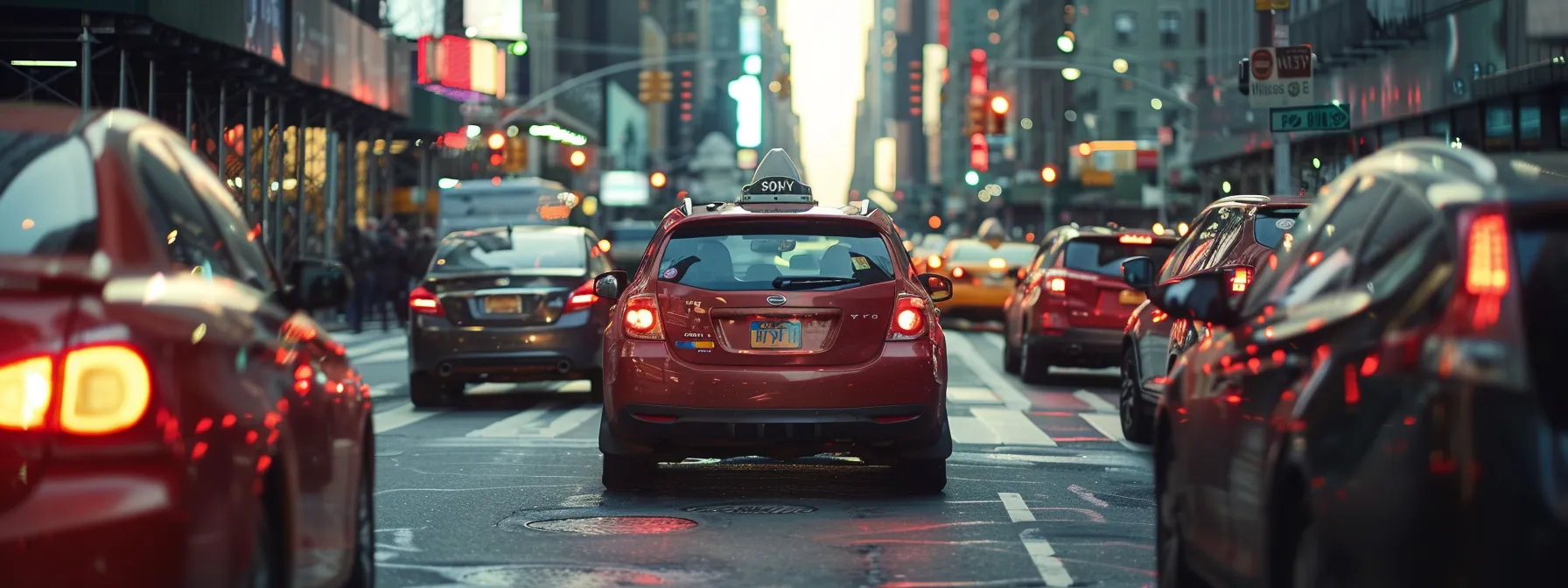
For many aspiring motorists in the Big Apple, parallel parking emerges as the behemoth of the driving test . It’s a skill that requires not only precise vehicle control but also the nerves of steel necessary to execute it amid the urban ballet of honking taxis and onlookers.
Traffic navigation in New York’s bustling streets can fluster even seasoned drivers. The driving test’s demand for constant vigilance, while managing the symphony of stoplights, pedestrians, and unpredictable cabbies, poses a formidable challenge to any test-taker.
The tight and unforgiving lanes of New York add another layer of difficulty to the driving test. It’s one thing to know the rulebook by heart, another to apply it when you’re threading the needle between a delivery truck and a double-parked vehicle.
Lastly, the ever-present pressure of the examiner’s gaze can turn simple tasks like signaling and lane changing into mental hurdles. The key is maintaining composure; after all, confidence behind the wheel often translates to success on the road test in NYC.
Taking the Driving Test for the Second Time
Retaking the driving test isn’t just about redemption; it’s a second shot at earning those coveted driving privileges. The experience comes with a seasoned perspective, one that’s been sharpened by previous missteps and the feedback they prompted.
This time around, nerves may still be fluttering, but they’re matched by a deeper understanding of what awaits. Known challenges can be approached with new strategies, a clear indication of growth and learning since the first attempt.
Preparing for round two doesn’t have to mimic the first go-around; it calls for a tailored regimen that zooms in on the tricky parts that may have tripped you up before:
- Refining parallel parking skills to conquer the urban obstacle course.
- Brushing up on trafficlaw nuances to navigate the concrete jungle more confidently.
- Practicing calm, collected maneuvering in the face of unexpected road events.
With the approach of the second driving test, hope revs up, fueled by the knowledge that this time, the finish line isn’t just reachable—it’s waiting for you to zoom past it with a triumphant honk.
Conclusion

Stepping into the world of driving in New York causes a swirl of anticipation in any aspiring driver. It’s a mix of nerve-wracking challenges and exhilarating moments of triumph, culminating in that sweet sense of achievement: the driver‘s license.
What begins as a quest to conquer the intricacies of the DMV can evolve into a confident stride into independence. It’s the knowledge gained from each practice session, each falter, and eventual success that adds up to a well-rounded, road-savvy New Yorker.
Here’s the journey wrapped up from start to finish:
- Hit the books and roads hard, ensuring a solid foundation of driving knowledge and skills.
- Make use of DMV resources and practice tests to sharpen understanding and strategize for success.
- Face the driving test with confidence, applying preparation to performance when it matters most.
- If needed, recalibrate after a misstep and harness the learnings for a successful second attempt.
And so, with keys in hand and the horizon beckoning, a new driver merges onto life’s highway, ready to navigate its twists and turns with newfound autonomy. Each stop sign, merging lane, and bustling intersection becomes a testament to the journey—challenging, sometimes maddening, but ultimately rewarding beyond measure.
Frequently Asked Questions
How to pass the driving test in NY?
Sure, nailing the New York driving test is all about preparation. Get plenty of practice, especially on the maneuvers you’ll be tested on, like parallel parking. Familiarize yourself with the vehicle insurance you’ll use and the typical road test routes in your area.
Next up, ensure you’re comfy with road signs, rules, and the points system that examiners use. On test day, stay calm, focused, and confident. A clear head will help you navigate the nuances of New York’s roads and impress your examiner.
Are backup cameras allowed during the driving test in NY?
Absolutely, backup cameras are permitted on the road test in New York. The state recognizes that these features are part of modern vehicles, and it’s okay to use them.
However, don’t rely solely on the camera. Your ability to manually check your surroundings is crucial and will be assessed.
Are there cones in the NY driving test?
Sure, you’ll find cones during the New York road test. They’re used mainly for the parallel parking section, which tests your ability to maneuver into a tight space.
Aside from parking, you won’t really deal with cones. The test focuses on real-world driving conditions rather than obstacle courses.
Can a person with a permit test drive a car in NY?
In New York, a person with a permit can indeed test drive a car. Yet, they must be accompanied by a licensed driver who is at least 21 years of age and occupies the front passenger seat.
This ensures that the learningdriver is under the guidance of an experienced motorist, meeting the legal requirements for driving with a learner’s permit and license in the state of New York.
Can I book a driving test in NJ with a NY permit?
You’re out of luck if you’re hoping to book a driving test in New Jersey with a New York permit. The Garden State requires that applicants hold a valid NJ permit to take the road test there.
It’s a policy rooted in ensuring that all drivers are familiar with New Jersey-specific traffic laws. So, you’ll need to stick to scheduling your driving test in New York if that’s where your permit is from.
Can I drive to my road test in NY?
Sure, you can drive to your road test in New York, but you can’t be the one behind the wheel. You’ll need a licensed driver to accompany you to the driving test location since you are not yet fully licensed to drive alone.
The accompanying driver must be 21 or older with a valid New York State license. They should be seated beside you during the drive to the test site, ensuring you comply with state laws until your examiner takes the passenger seat.
Can I take a written driving test online in NY state?
No, in New York State, you can’t take the written driving test online. You must visit a DMV office in person to take the written exam for a learner’s permit.
However, once you’ve passed the written test, services like www.roadtestsny.com help schedule your road test online promptly, without the lengthy DMV wait times.
Can I use a rental car for the driving test in NY?
Certainly, you can use a rental car for your New York driving test. Just make sure the rental agreement explicitly allows for road tests, and the vehicle meets all New York DMV requirements.
Also, bring along the rental contract and proof of vehicle insurance to the test. The car needs to have proper plates, working signals, and seat belts, and a front passenger seat for the examiner.
Can NJ residents take the NY defensive driving test?
Certainly, New Jersey residents can take a New York defensive driving course. Completing the course might lead to insurance discounts, but won’t affect New Jersey driving records.
However, for direct impact on driving records and points, the course must be approved by New Jersey’s MVC.
Conclusion
Securing a timely road test appointment through expedited services like www.roadtestsny.com is key to avoiding long DMV wait times, enabling eager drivers in New York to hit the road sooner. Preparation is pivotal; a valid learner’s permit, driver’s education, and insurance are essentials for both peace of mind and compliance on test day. Expert navigation of the booking process and the road itself demonstrates readiness for the responsibility of driving. Ultimately, leveraging such convenient services offers a smoother path to obtaining a driver‘s license, propelling New Yorkers into their next journey with confidence. Information