
As the chill sets in and snowflakes start to dust the streets of New York City, gearing up for your NY road test can feel like an extra layer of challenge. Winter road test preparation NYC demands more than just memorizing traffic rules it’s about adapting to slippery roads, reduced visibility, and the chaotic ballet of taxis, buses, and pedestrians in slushy conditions. But don’t worry: with the right prep, you can turn those frosty fears into a smooth pass. Whether you’re a nervous newbie eyeing your learner’s permit or a seasoned behind-the-wheel student battling the elements, these specialized tips will equip you to navigate the test like a pro. From vehicle checks to mindset shifts, we’ll cover it all, drawing on real-world experiences from NYC drivers who’ve conquered the cold. Let’s dive in and make sure you’re road-ready before the first big snow hits.
1. Gear Up Your Vehicle for the Cold
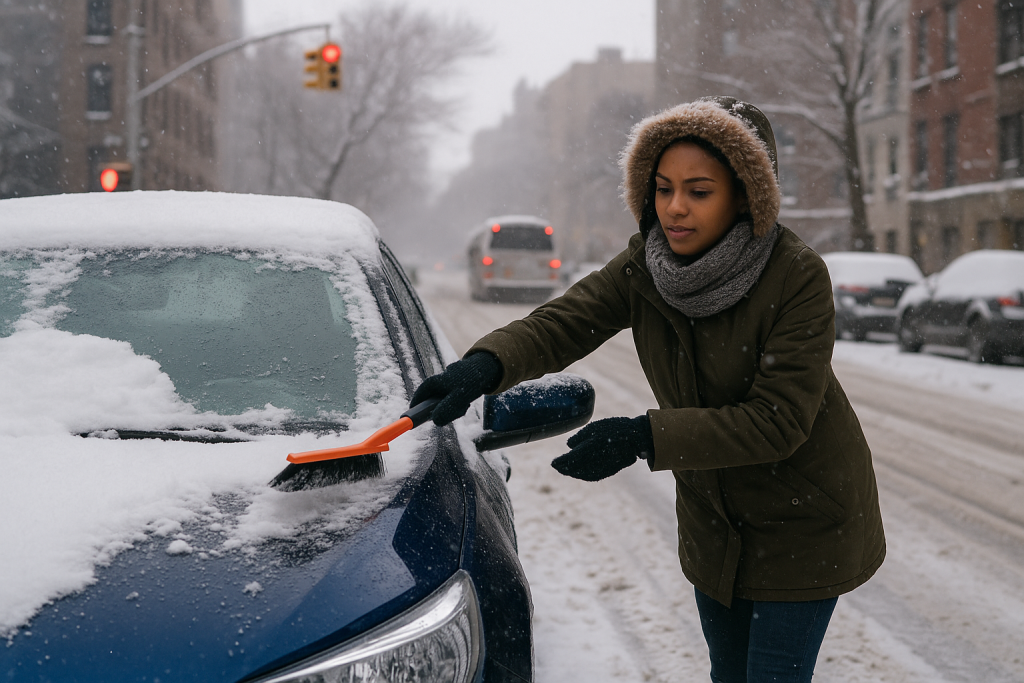
Your car is your co-pilot, and in NYC’s unpredictable winter weather, it needs to be winter-ready to avoid automatic fails. The last thing you want is a stalled engine or foggy windows derailing your big day. Start by inspecting your ride well before test day ideally, a few weeks in advance to give yourself time for any repairs.
- Swap to Winter Tires Early: Install snow tires (M+S rated or with the three-peak mountain snowflake symbol) on all four wheels before the first flake falls. Never mix radial and non-radial tires, and remember, metal-studded tires are legal in NY from October 16 to April 30, which is perfect timing if you’re prepping now. Good tread depth at least 2/32 of an inch prevents hydroplaning on wet snow or black ice, a common NYC hazard after plows push slush aside onto side streets. If you’re renting a car for the test, confirm with the agency that it has winter-ready tires; many NYC rental spots stock them seasonally. This simple swap can boost traction by up to 50% on icy surfaces, giving you that extra confidence during sharp turns.
- Clear the Ice Completely: Scrape every inch of windows, mirrors, headlights, and taillights no foggy spots allowed, or you’ll risk failing for obstructed views. In the rush of a winter morning, it’s tempting to just swipe the windshield, but examiners are sticklers for full visibility. Fill your windshield washer with antifreeze solution to blast away salt residue from city streets, and test your wipers and defrosters the night before. Pro tip: Keep an ice scraper and a bag of cat litter in your trunk for emergency traction if you get stuck in a snowbank better safe than scrambling.
- Opt for Front-Wheel Drive if Possible: Rear-wheel drive cars are prone to fishtailing on ice, especially in the tight confines of Brooklyn or Queens neighborhoods. Borrow a front- or all-wheel-drive vehicle for better traction during maneuvers like parallel parking. If all-wheel drive isn’t an option, at least ensure your battery is fresh; cold weather can sap up to 60% of its power, leading to sluggish starts that could cost you points.
Beyond these basics, do a full pre-trip inspection, including brakes, lights, and fluid levels. Check your exhaust for blockages from snow buildup, and ensure your heater works to keep the cabin warm—frozen fingers make for shaky steering. For more detailed vehicle checklists tailored to NY tests, head over to our comprehensive guide on road test vehicles.
Expanding on this, consider the unique NYC factor: salted roads. Salt corrodes undercarriages faster in winter, so rinse your vehicle weekly to prevent brake issues. If you’re practicing in a high-mileage family car, simulate test conditions by driving through salted tunnels like the Lincoln or Holland feel how it affects handling and adjust your grip accordingly.
2. Hone Safe Driving Techniques for Snow and Ice
The NY road test isn’t just about dry-day perfection; winter roads demand patience and finesse. Brake gently, accelerate slowly, and always increase your following distance to 3-5 seconds that’s at least an extra car length in slush. Slippery conditions amplify small mistakes, so practice these essentials in controlled environments like empty parking lots before hitting the streets.
- Brake Early and Gently: On snow or ice, “press” your brakes in slow, steady strokes to avoid locking up. If your car has ABS, keep even pressure; otherwise, pump carefully. This is crucial for NYC’s stop-and-go traffic, where sudden halts at lights on FDR Drive can lead to skids into the next lane. Imagine approaching a red light in light flurries: ease off the gas 50 feet early, and feather the brake to glide to a stop. Over time, this builds a rhythmic flow that examiners love smooth, predictable control.
- Recover from Skids Like a Pro: If rear wheels skid, steer in the direction the car is sliding (left for left, right for right) while easing off the accelerator. For front-wheel skids, shift to neutral briefly and steer once traction returns. Bridges and overpasses freeze first in NYC, so extra caution on spots like the Brooklyn Bridge. Practice this in a safe spot: find a quiet, snowy lot and simulate a gentle swerve. Remember, the key is minimal input overcorrecting turns a minor slip into a spinout.
- Maintain Visibility: Use low-beam headlights whenever wipers are on it’s the law for rain, snow, or fog, and it cuts glare in city lights. Avoid high beams, as they reflect back off flurries and blind you. In dense fog rolling off the East River, NYC-approved fog lights (amber/white front, red rear) can help, but pair them with slowed speeds. Clean your headlights weekly, as salt buildup dims them by 20-30%, turning nighttime tests into a visibility nightmare.
Roads are slickest near freezing temps (around 32°F), when a thin water layer tops the ice common in the city after a quick thaw from building heat. Layer your clothing wisely: thermal gloves for grip, but not so bulky they hinder wheel turns. For advanced techniques, explore our winter driving drills section to simulate these scenarios at home.
To deepen your skills, incorporate mental rehearsals. Visualize a skid while watching dashcam videos of NYC winters it’s a low-risk way to wire your brain for calm responses. And don’t forget hydration; dry cabin air in winter zaps focus, so sip water to stay sharp.
3. Tackle NYC’s Urban Winter Quirks
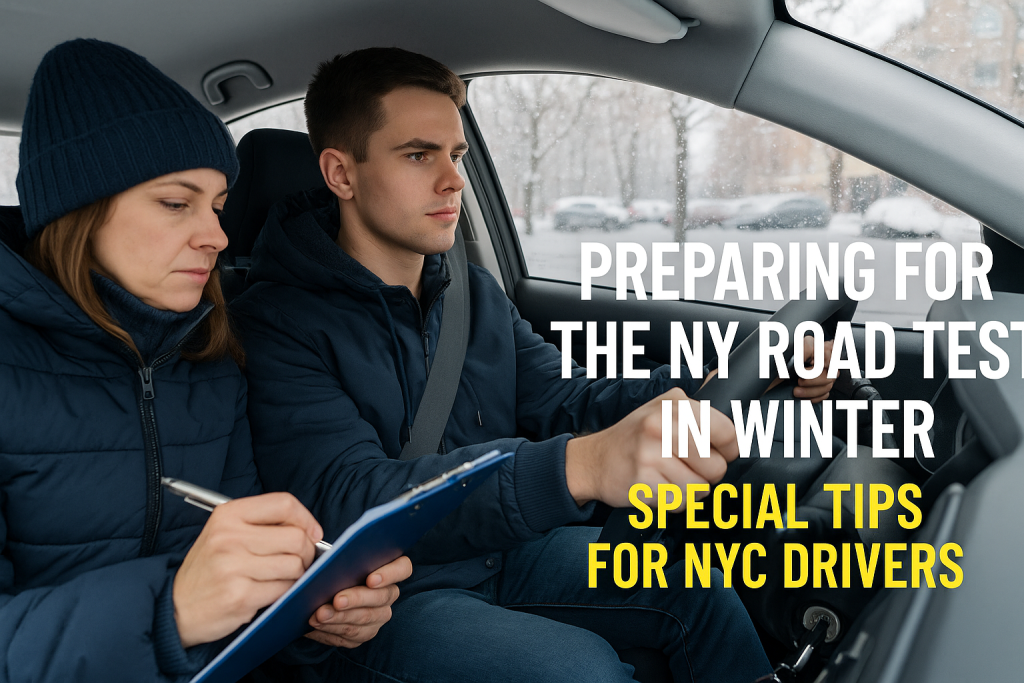
New York City winters aren’t just cold; they’re a slushy gauntlet of potholes, double-parked delivery trucks, and aggressive yellow cabs zipping through crosswalks. Tailor your winter road test preparation NYC to these realities, where a single snowdrift can turn a routine right turn into an adventure.
- Slow Down in the Snowy Maze: Posted speeds are for dry days cruise at 15-20 mph on residential streets piled with snowbanks, even if the limit says 30. Examiners understand winter caution and won’t ding you for matching traffic flow safely, especially in areas like Harlem where plows lag behind. Use your rhythm: count “one-Mississippi” between cars to gauge safe speeds visually.
- Watch for Hidden Hazards: Plowed streets mean snow piles at curbs, so when parallel parking, stay 1-2 feet from the bank to avoid getting stuck (examiners hate pushing cars!). Creep forward at stop signs if snow buries the line, stopping just behind the sidewalk for a clear view of oncoming traffic. Potholes, exacerbated by freeze-thaw cycles, hide under slush scan the road like a hawk and straddle them if needed.
- Defensive Driving in the Chaos: Increase space around buses and pedicabs slipping on salted roads. Shoulder check twice before every turn or lane change NYC’s blind spots multiply in low light and flurries. And always yield to snowplows; give them a wide berth, as their blades kick up ice chunks. In Manhattan’s gridlock, this means anticipating merges from delivery vans signal early and claim your lane assertively but gently.
From fellow testers’ tales, communicating your caution (e.g., “I’m slowing for the ice ahead”) shows awareness without overthinking. Dive deeper into city-specific hazards with our NYC winter road quirks guide.
Amplify this by mapping your practice route: Use apps to scout recent plow paths and avoid unplowed alleys. Share the wheel with a friend for feedback NYC winters teach humility fast.
4. Practice Key Maneuvers Without the Freeze-Out
The road test includes turns, stops, and parking winter amps up the nerves, but looseness in conditions can actually help with smoother inputs. Focus on control over perfection.
- Parallel Parking with Wiggle Room: Line up behind the car ahead, reverse slowly while turning the wheel fully, and stop before hitting the snowbank. No need for curb-hugging precision; just be safe and controlled. In tight spots like the Upper West Side, angle your approach wider to account for slush.
- Three-Point Turns and Backing: Scan 360° every vehicle length when reversing, and use your mirrors plus backup camera (but eyes out the window first). For reverse stalls, signal, shift to reverse, and back while keeping hands “bolted” to the wheel at 9 and 3. Snow softens impacts, but it hides curbs creep and feel for resistance.
- Intersections and Turns: When waiting to turn left, straddle the crosswalk line without entering the intersection. Accelerate gently into straight lines post-turn, and signal fully before merging vital in NYC’s multi-lane madness. Right-on-red? Double-check for peds slipping across.
Practice in empty lots first, focusing on smooth inputs to build muscle memory for icy grip. Gradually move to real streets, timing sessions for light snow to build resilience. Check out our maneuver mastery workbook for printable drills.
To expand, role-play with a passenger as the examiner: Narrate your actions to ingrain habits. Track progress in a journal what felt slippery today?
5. Mindset: Stay Calm and Forecast Ahead
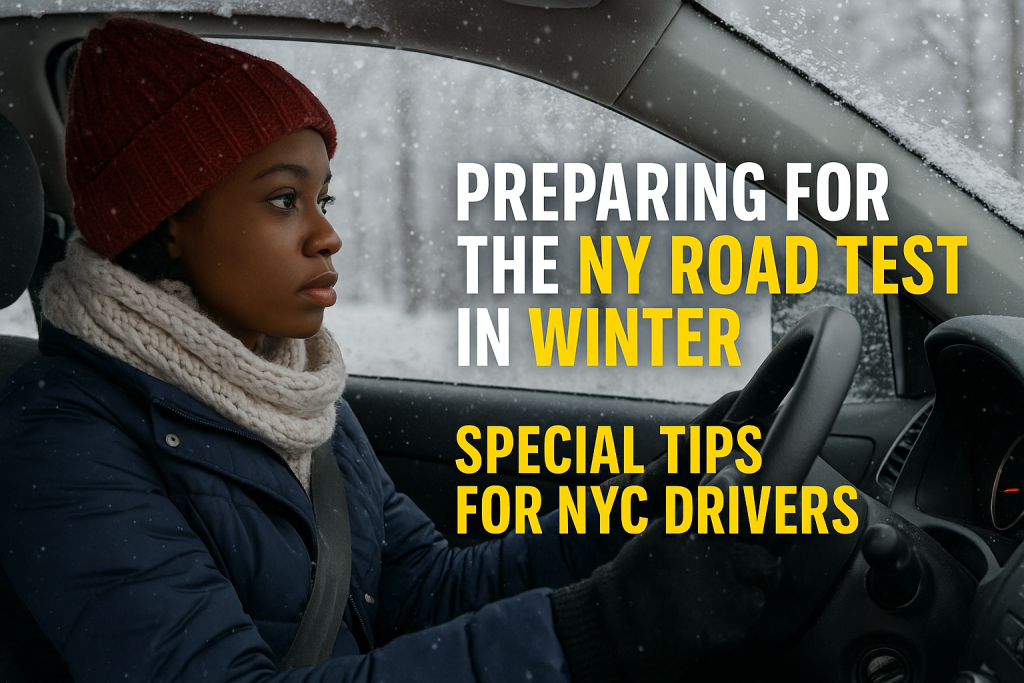
Winter tests might seem tougher, but examiners are human they won’t throw you into a blizzard. Check the weather app religiously; reschedule if it’s a whiteout via the DMV portal.
- Arrive Early and Relaxed: Factor in extra time for salted roads and traffic snarls. A hot coffee helps, but keep the cabin comfy with defrosters on. Breathe deeply: In for four, out for six to steady nerves.
- Focus on the Fundamentals: Speed management, observation, space, and communication adapt them to winter without overcorrecting. You’re not racing; you’re demonstrating safe control. Celebrate small wins, like a flawless stop.
- Post-Test Secure: Always engage the parking brake and shift to park after maneuvers it’s a safety win, even in slush.
Cultivate resilience through visualization: Picture passing amid flurries. Fuel with winter-friendly snacks nuts for steady energy. For mindset boosters, visit our mental prep toolkit.
Layer in routines: Morning affirmations like “I handle winter roads with ease.” Connect with online forums for shared stories it’s empowering.
FAQ: Common Questions on Winter Road Test Prep in NYC
Q: Can I reschedule my road test in winter if it snows heavily?
A: Yes, the NY DMV allows rescheduling up to 24 hours before without penalty for weather. Monitor forecasts and book a new slot early spots fill fast in milder windows.
Q: What if my car doesn’t have winter tires? Will I fail automatically?
A: No automatic fail, but poor traction could lead to errors during maneuvers. It’s highly recommended; borrow a equipped vehicle if needed to showcase safe driving.
Q: How do I handle black ice during the test?
A: Stay calm, ease off the gas, and steer into the skid’s direction. Prevention is keyslow down on shaded or bridged areas. Practice recognition in safe zones.
Q: Are there extra points deducted for winter conditions?
A: No, the scoring is standard, but examiners expect adjusted caution. Safe adaptation scores higher than rigid rule-following.
Q: What’s the best time of day for a winter test?
A: Mid-morning after plows clear main roads, avoiding rush hour slush and early darkness. Check NYC 311 for plow updates.
Q: Do I need special insurance for practice drives in winter?
A: Standard learner’s permit rules apply ensure your supervisor has a valid license. Add comprehensive coverage if towing a trailer for practice.
Wrap-Up: Slide into Success This Winter
Mastering winter road test preparation NYC boils down to prep, patience, and practice. By outfitting your vehicle, refining your techniques, embracing the city’s frosty flow, and building a rock-solid mindset, you’ll not only pass but become a confident winter warrior on Gotham’s grid. Bundle up, book that slot today, and remember: every snowflake is just a chance to prove you’re road-ready. Ready to take the next step? Visit RoadTestsNY.com to schedule expert lessons or grab exclusive prep kits tailored for NYC winters. Safe driving, future New Yorkers may your test be as smooth as a salted sidewalk!