
Your Go-To Guide: Scheduling and Acing Your New York Road Test
Ready to move from learner’s permit to a full driver’s license? Scheduling your New York road test is that crucial next step, but we know the official systems can feel confusing and wait times can be long. This guide cuts through the noise, showing you exactly how to book your NY road test – whether through the NYSDMV or our faster, private options. We’ll cover the essential documents, vehicle requirements, and proven preparation steps that truly make a difference. You’ll get clear, step-by-step booking instructions, a handy checklist of all required paperwork, tips on finding the best test sites and routes, smart practice strategies to avoid common mistakes, and how to easily manage rescheduling or cancellations. We’ll break down ‘regular,’ ‘rush,’ and ‘super rush’ scheduling, with comparison tables to help you weigh cost versus speed. By the time you finish, you’ll have a clear action plan to book, prepare, and significantly boost your chances of passing your New York road test with confidence.
How to Book Your Road Test in New York
Booking your New York road test means picking the right path for you, gathering your ID and permit details, and then selecting a test site and date that fits your license class. The official NYSDMV appointment system lets you search for available dates and locations by license class, while third-party expedited services offer paid tiers that prioritize getting you a faster appointment. Your choice depends on how quickly you need to get on the road, your budget, and whether you want extra support for payments or scheduling hiccups. Below, we’ll walk you through the practical online steps for both official DMV booking and our expedited options, followed by a clear comparison of scheduling tiers and when each makes the most sense.
What Are the Online Steps to Book Your NY Road Test?
Booking your NY road test online typically starts by logging into the NYSDMV portal using your permit credentials, then choosing your license class and preferred test site. Make sure you have your permit number, full legal name, date of birth, and vehicle class ready. You’ll then follow prompts to view calendars, confirm your eligibility, and agree to the rules for test day. For third-party expedited services, our process usually asks for your permit details, desired timeframe, and a payment method to secure an earlier slot on your behalf. To avoid any snags, always double-check your permit number, confirm your license class, and verify vehicle requirements before finalizing any booking.
Regular, Rush, or Super Rush: What’s the Difference?
Regular scheduling refers to the standard availability you’ll find on the NYSDMV calendar, often meaning a wait of several weeks, depending on your location and the time of year. Rush scheduling is an expedited private option that can cut your wait time down to roughly one to three weeks for those who opt for prioritized placement. Super rush is our fastest paid tier, aiming to get you an appointment within about one week if you’re willing to pay a premium for immediate placement. Cost is the main trade-off here – regular scheduling is free through the DMV, while rush and super rush options come with explicit fees. Your urgency, flexibility, and budget will help you decide which scheduling speed is right for you.
What You Need to Take Your New York Road Test
A successful NY road test application hinges on meeting age and permit eligibility, completing any required pre-licensing education, and presenting original documents along with a properly registered and insured vehicle for inspection. The key to eligibility is verification: the DMV and examiners will confirm your learner’s permit, your five-hour pre-licensing certificate (MV-278) if required, and any driver education documentation (MV-285) that applies. Meeting these requirements upfront helps you avoid a frustrating no-show disqualification, letting the examiner focus solely on evaluating your driving skills. The table below clearly outlines the primary documents, where they come from, how they’re used, and acceptable formats to make your test day check-in smooth and stress-free.
Quick tip: This table explains exactly which paperwork you must bring and why each item is crucial during check-in.
This breakdown clarifies that each item needs to be physically validated and current. Having all originals and certified copies ready prevents last-minute disqualification, allowing you to relax and focus on your driving once check-in is complete.
The history of driver licensing examinations reveals a long-standing focus on the practical road test as a crucial component of assessing driving competence.
Investigation of Road Test Phases in Driver Licensing Examinations
This document is an abstract for a dissertation investigating the road test phase of driver licensing examinations in various states, with a focus on current road tests. While the abstract is brief, it indicates a historical examination of road testing procedures, which is relevant to understanding the evolution and current state of road tests, including those in New York.
… OF THE ROAD TEST PHASE OF THE DRIVER LICENSING EXAMINATIONSOF THE VARIOUS STATES: AN INVESTIGATION OF CURRENT ROAD TESTS …, 1960
How to Get Your Learner’s Permit in New York
Getting your New York learner’s permit starts with meeting the age requirements and successfully passing a vision screening and a written permit test that covers essential traffic laws and signs. You’ll need to present acceptable identity documents at an approved DMV office, pass the vision test, and then ace the multiple-choice knowledge test to receive your permit. This permit grants you supervised driving privileges, which is a legal must-have before you can schedule your road test, once you’ve met the required supervision hours and education certificates. After getting your permit, make sure to plan a structured practice schedule and confirm whether a driver education course (MV-285) or the five-hour pre-licensing course (MV-278) is needed for your specific situation.
What Documents and Certificates Are Essential for Your Road Test?
On test day, examiners will carefully inspect your learner’s permit, any required education certificates, vehicle registration, and insurance documents to confirm both your eligibility and your vehicle’s compliance. The MV-278 five-hour pre-licensing course certificate is mandatory for many applicants, so be sure to bring the original certificate or an official copy from a certified provider. Vehicle requirements typically include valid registration, current insurance for the car you’re using, and all safety equipment in perfect working order; examiners can refuse vehicles that don’t meet these inspection standards. Bring all original documents, have photocopies as backups, and keep everything easily accessible to speed up the check-in process and reduce any pre-test jitters.
Find Your New York Road Test Location and Route
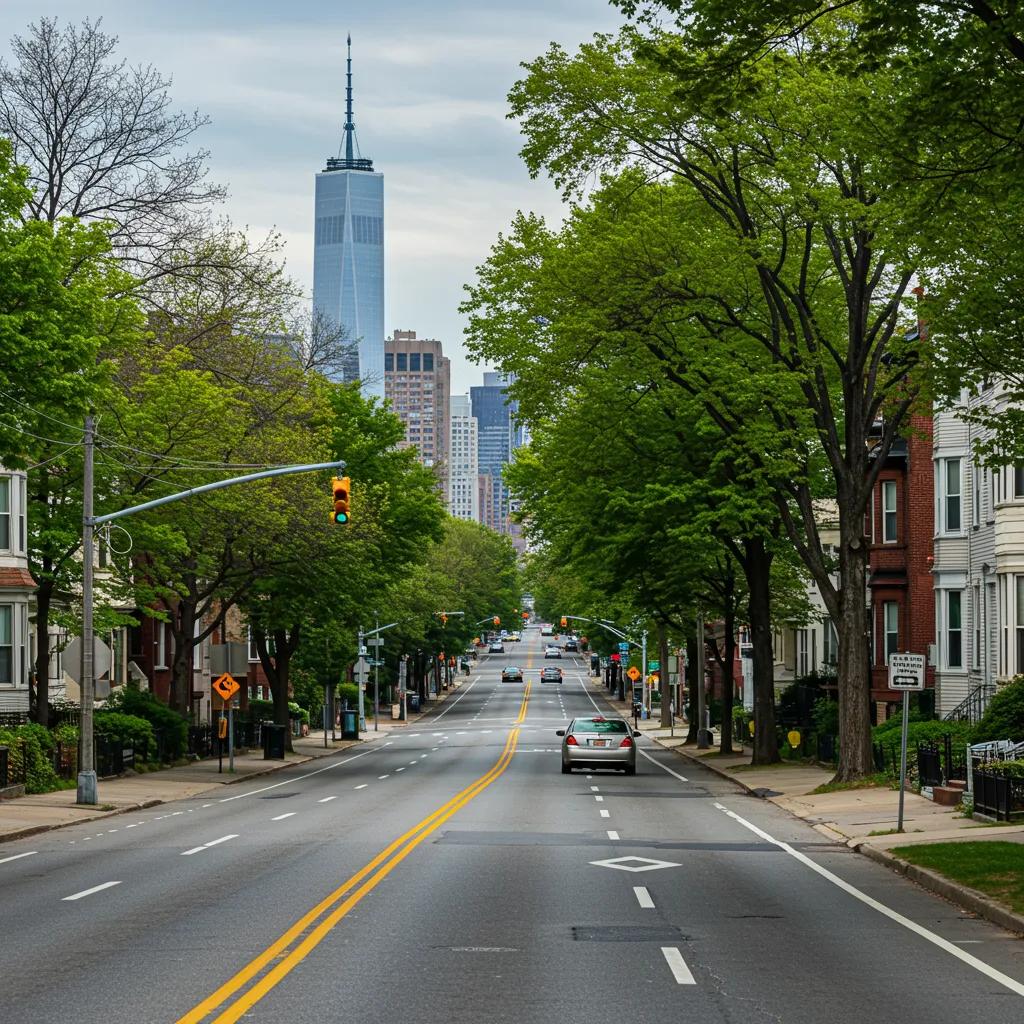
New York road test locations are organized by region and license class, and choosing a nearby test center often impacts both your wait times and the specific route characteristics you’ll encounter during your examination. The NYSDMV provides handy search tools that let you filter by city or borough and by license class, while third-party resources and guides offer detailed notes on common route features, peak traffic times, and parking logistics at major sites. Understanding the typical maneuvers and local traffic patterns at your chosen site will help you focus your practice sessions on the exact skills that will be assessed. The table below compares sample site attributes, so you can easily evaluate travel time, route complexity, and transit access when picking your ideal location.
Here’s a quick look at how different test-site characteristics can influence your experience and what you should focus on during preparation.
This comparison clearly shows that urban sites emphasize tight maneuvers and sharp observation skills, while suburban and highway-adjacent sites demand confident speed control and merging abilities. Whenever possible, choose a test site that aligns with your strongest practice environment.
Research into graduated driver licensing programs has demonstrated their effectiveness in improving road safety for young drivers in New York.
Graduated Driver Licensing Safety Benefits in Upstate New York
This study examines the safety benefit of graduated driver licensing (GDL) on licensure and traffic injury rates in Upstate New York. The GDL program includes restrictions such as a learner’s permit phase, supervised driving, and a passenger restriction. This study examines its safety benefit in 55 Upstate New York counties. The findings suggest that GDL laws are associated with a reduction in traffic injuries among young drivers. The paper mentions that drivers could obtain a junior license immediately after they passed the road test.
Effects of graduated driver licensing on licensure and traffic injury rates in Upstate New York, M Zhu, 2009
How to Find Road Test Sites Near You in NYC and Beyond
To pinpoint test sites close to you, use the NYSDMV test-site search tool and filter by borough or postal area. Don’t forget to consider travel logistics like transit connections and parking availability. It’s smart to shortlist two or three nearby sites to give yourself more flexibility when the calendar opens up; candidates often switch to a secondary site if their first choice has limited availability. When planning your drive to the test site, factor in typical arrival times, peak traffic windows, and public transit reliability. Practicing the actual route to the DMV or test site at the same time of day as your appointment can significantly reduce anxiety and expose potential delays before your big day.
What Are the Most Common Road Test Routes in New York?
Popular test-route characteristics vary by site: urban routes typically feature close-quarter turns, curbside parking tasks, and heavier pedestrian interactions, while suburban routes often test higher-speed lane changes and highway merging. Examiners generally evaluate the same core maneuvers across all sites—turning, lane management, parking, signaling, and intersection behavior—but local features like roundabouts or multi-lane roads will shift the emphasis. Your practice drills should mirror the most common route features at your chosen site, ideally with a partner driver or instructor recreating realistic traffic conditions. Focusing on these site-specific maneuvers will significantly reduce your chance of errors and boost the examiner’s confidence in your driving competence.
How to Prepare to Pass Your New York Road Test
To truly prepare and pass your NY road test, you need deliberate practice of core maneuvers, a solid understanding of examiner expectations, and realistic mock tests that perfectly replicate test-day conditions. Create a weekly practice schedule that expertly balances basic control skills with real-world on-road situations like merging, lane changes, controlled stops, and parking; consistent repetition builds crucial procedural memory and helps you perform flawlessly under pressure. Don’t forget off-road checklist work, such as vehicle inspection and paperwork readiness, so nothing distracts from your actual driving performance. Below, you’ll find targeted preparation lists and recommended resources to strengthen any weak areas and structure your practice sessions effectively.
Here’s a list of common mistakes and how to correct them in your practice sessions.
- Rolling Stops: Always ensure a full, complete stop at stop lines, and count to one before moving forward.
- Poor Lane Positioning: Practice maintaining consistent lane centering at various speeds until it feels natural.
- Insufficient Mirror Use: Make it a habit to check mirrors and signal *before* every single maneuver.
- Improper Parking: Rehearse parallel and angle parking repeatedly, using cone targets or markers for precision.
Each item above highlights a specific habit to drill. Correcting these predictable mistakes will significantly increase your overall pass probability and help you demonstrate examiner-grade control during your assessment.
What Are the Most Common Mistakes to Avoid on Your NY Road Test?
Test failures often come from predictable mistakes—like rolling through stop signs, signaling too late, poor lane control, or not checking mirrors enough—which usually reflect a lack of routine habit rather than technical inability. Tackle these mistakes with targeted drills: practice repeated full stops at marked lines, use cue-based mirror checks before *any* lane change, and perfect slow, tight parking with a timed setup. During practice sessions, simulate the examiner’s pacing and verbal instructions so your responses become automatic under observation. Building consistent pre-maneuver routines will reduce cognitive load on test day and dramatically improve your overall driving fluidity.
Which Online Courses and Practice Resources Can Help You Prepare?
Road Tests NY offers free practice quizzes and a range of paid preparation courses, including our “New York State Road Test Preparation Course” for $75.00, “Driving Foundations 101” for $49.00, and “Highway Driving” for $69.00. These courses specifically focus on site-relevant skills and what examiners expect. Combining these online courses with in-car supervised practice yields the best outcomes, as online instruction clarifies technique while real driving builds essential muscle memory. Use our online resources to pinpoint your weaknesses, then apply in-car drills to transform that knowledge into consistent, confident performance.
Costs and Payment Options for Your NY Road Test
When considering the cost of scheduling your NY road test, you’ll find a key difference between booking directly through the NYSDMV (which typically has no expedited booking fee) and paying for prioritized appointment scheduling via a private service. Our private expedited options come with tiered pricing that trades increased speed for a predictable fee. Knowing the expected wait time and our cancellation or reschedule policies will help you decide if the convenience is worth the cost. The table below clearly compares the typical attributes of the NYSDMV and the three expedited tiers offered by Road Tests NY, so you can easily evaluate cost, expected wait time, and basic refund/reschedule characteristics.
This comparison will help you weigh time versus cost when planning how to secure your ideal test date.
This table clearly illustrates that our paid tiers provide significantly compressed timelines at explicit prices. The main trade-off is investing money for speed and dedicated concierge support during the scheduling process.
How Much Does Each Scheduling Option Cost?
The official NYSDMV path generally doesn’t charge a separate booking fee beyond any standard DMV licensing fees, but be prepared for potentially long wait times depending on demand and location. For applicants who prioritize speed, Road Tests NY offers three paid tiers: Regular for $25.00 (typically 6–10 weeks), Rush for $90.00 (around 1–3 weeks), and Super Rush for $150.00 (appointments within about one week). When choosing among these options, consider your timeline, budget, and tolerance for temporary scheduling uncertainty. For many, our $25.00 regular option is a low-cost way to get expert scheduling help, while the $90–$150 options are invaluable when time is truly of the essence.
What Payment Methods Are Accepted for Road Test Booking?
Payment methods for online booking commonly include major credit and debit cards, and may also feature other secure online processors for third-party services. Always ensure the provider uses secure payment processing and issues clear receipts. When paying for expedited scheduling, keep a detailed record of confirmation numbers and receipts in case you ever need to request a reschedule or refund. Before purchasing, review the service’s refund and reschedule rules so you fully understand any blackout windows or processing timelines. Secure payment and transparent receipt issuance are crucial protections if administrative changes are required before your test date.
How to Reschedule or Cancel Your New York Road Test Appointment
Rescheduling or canceling your road test involves different steps depending on whether you booked through the NYSDMV or a third-party service, and timing is absolutely critical because cutoffs and fees may apply. For NYSDMV bookings, you’ll typically log into your DMV account and follow the reschedule links before the deadline; failing to cancel within the required windows can mean forfeiting your appointment. For private expedited services like ours, our team typically manages rescheduling for you and may have specific lead times and partial refund rules. Below, you’ll find practical steps and policy considerations so you can change dates without losing fees or your valuable appointment slot.
Here are the main steps for rescheduling through each booking path, plus timing tips to help you avoid unnecessary fees.
- NYSDMV reschedule: Log into your DMV account early and select a new date within the allowed timeframes.
- Third-party reschedule: Contact our scheduling team as soon as possible; always follow our stated deadlines.
- Documentation: Keep all confirmation receipts and any correspondence to support refund or schedule requests.
Following these steps will reduce the risk of losing your slot and provide a clear record if any disputes about timing or refunds arise.
For those who prefer an assisted booking path, Road Tests NY provides expedited scheduling options with clear pricing and dedicated concierge support for managing appointments and changes. Our paid tiers offer faster placement and 24/7 customer assistance, which can be incredibly helpful if you need rapid rescheduling or troubleshooting during the booking window. Road Tests NY also offers valuable preparation resources and free practice quizzes to perfectly complement your booking assistance.
Final note: If you’re looking for expedited scheduling and concierge support to help secure an earlier NY road test appointment, definitely consider Road Tests NY’s regular, rush, or super rush options. Pair these with our preparation course offerings to combine faster booking with focused skill preparation. Our transparent pricing structure for scheduling and courses clearly outlines the trade-offs between cost and speed, while preserving your option to prepare with structured courses before your test.
About the Author
Sarah Miller
Certified Driving Instructor & NYSDMV Regulations Specialist
Sarah Miller is a highly respected certified driving instructor with over 15 years of experience helping thousands of students successfully navigate the complexities of the New York State Department of Motor Vehicles (NYSDMV) road test. Her deep understanding of state regulations, common test routes, and examiner expectations has made her a trusted authority in driver education. Sarah is passionate about fostering safe and confident drivers, and her insights are regularly sought after by aspiring licensees across New York.